
#Product Trends
Building precision localisation into a drone payload
Size, weight and power (SWaP) are some of the more apparent challenges that an engineer needs to address before embarking on a project to build a UAV payload. For example, if the components are too heavy, the overall flight time will suffer.
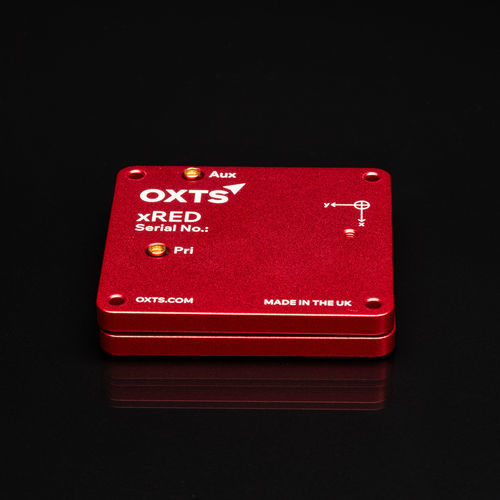
It’s therefore plain to see that building precision localisation into a drone payload can be a challenging proposition. These are the challenges that OXTS has been working hard to solve over the years, and our xRED boardset GNSS/INS allows drone operators to overcome many of the accuracy challenges associated with building precision localisation into a drone payload. But even with a high-performing piece of equipment like the xRED, integration into your drone can be complex.
In this blog, we’re sharing some of the practical challenges that our team has encountered over the years developing localisation solutions for drones. If you’re involved in the building of drone positioning payloads, this blog is a must-read.
- Lesson 1: Vibration dampening needs careful planning
Any GNSS/INS requires a level of vibration dampening – but when installing one on a drone, there are additional layers of complexity to account for. If you’re building precision localisation into a drone, you need to understand that drones vibrate a lot more than other vehicles! On top of that, smaller GNSS/INS units – like the xRED – are more susceptible to vibration interference than larger units, so if you’re used to working with big units, you will need more dampening than you might have expected!
An additional challenge is that different drones have different resonant frequencies. This leads to one of the major pieces of advice we would give anyone developing a drone positioning solution – make sure that your test model matches your production model as closely as possible. This is especially relevant if you’re developing a V2 model, for instance, and are considering using the V1 for testing the localisation.
Coming back to the vibration question, the only solution is to test, test, and test again. You can only tell if vibration is an issue once you’re looking at the data, which you can only do after a flight, in most cases. There is no fixed solution – you just need to build the right level of vibration dampening into your drone.
To learn what the other two lessons are, read the full article on the OXTS website.