#Industry News
Can clothes be recycled? The path from waste to wearable clothing
Can clothes be recycled? The path from waste to wearable clothing
Circular economy, Textile recycling
Can clothes be recycled? The path from waste to wearable clothing
In 2023, 183.8 billion pieces of clothing were consumed worldwide. Unfortunately, only 1% of recycled clothing is converted into new garments. This begs the question of how clothes are recycled today and how we can improve the recovery process. Yes, recycling is urgent and there are two main ways:
Reuse. This involves repurposing garments in their original form, either through second-hand sales, donation or creative transformation – such as upcycling or DIY (do it yourself).
Recycling materials. When garments cannot be reused, they are broken down into fibres that are used to create new textiles or materials for other industries, such as automotive or construction. In this case, fabrics should be sorted correctly in order to reduce waste.
Because in the European Union alone, 12.6 million tonnes of textile waste is produced annually, of which 5.2 million tonnes are discarded clothes and shoes, which translates into 12 kilos per person per year. This being the case, it is essential to recycle old clothes and give them a second life, in order to reduce the environmental impact of the textile industry and promote a circular economy. Firstly, however, we should question whether we really need to accumulate so many clothes in the wardrobe. Did you know that extending the lifespan of clothes by just 9 months of active use would reduce carbon, water and waste footprints by 20-30%?
But what can we do before our clothes accumulate unconscionably in our country’s landfills or, worse, travel to already overcrowded landfills in Africa? Let’s stop endangering Nature, and other populations on Earth, because, fortunately, recycling old clothes is possible.
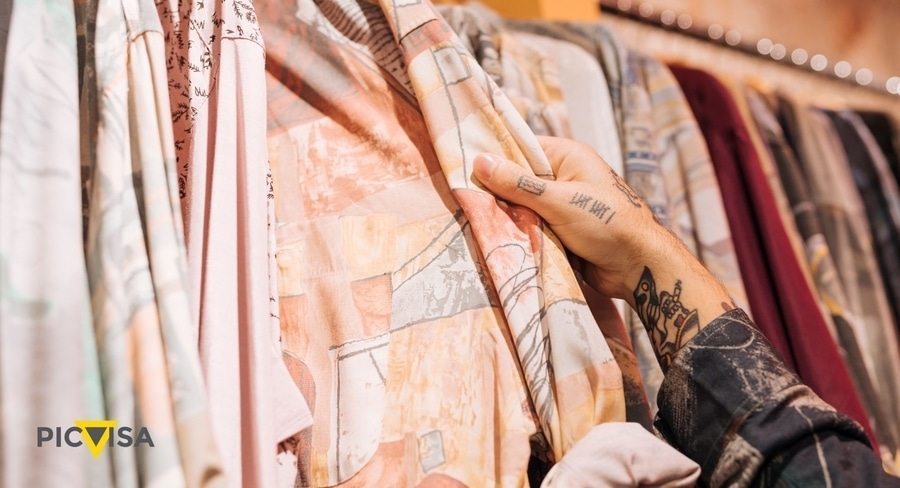
Let’s consider the various alternatives. You may want to sell your trousers, skirts, T-shirts, blouses, shoes, etc. on the second-hand market if you no longer wear them. You could also donate your clothes to third sector organisations that distribute them to the neediest people. Some of these NGOs use their own points of sale, shops where they create jobs, as they hire vulnerable people or people at risk of social exclusion. There they will sell your clothes to invest the money obtained in social aid programmes; and if they do not manage to sell them, they will export them to developing countries. But as the quality of the clothes gets worse and worse, and even in those countries they cannot be used, they end up in landfills. The truth is that the effort of these NGOs to enter the recycling field is incipient.
What types of clothes are recycled?
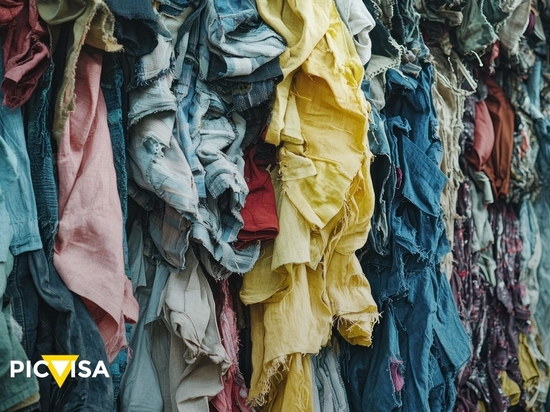
Recycling textiles involves collecting discarded clothing and other textiles and transforming them into new fibres or items. There are a number of textiles that are highly recyclable, which significantly reduce waste and promote sustainable practices: cotton, linen, wool and other natural materials. If they are pure, and in good condition, these materials can be recycled into new fibres from which to make quality products. Alternatively, they can be used for downcycling, i.e. for making cleaning rags and mats, carpets, car seat covers, etc.
The big problem is that most of the clothes in our wardrobes are made from a mixture of textiles, including polyester. This is the most widely produced fibre, in fact, it accounts for a 54% share of the world’s total fibre production, according to the global non-profit organisation Textile Exchange.
The textile recycling process
Significantly reducing the waste that ends up in landfills and incinerators is an environmental priority. Hence the importance of promoting textile recycling, a process that involves several stages:
Collection and sorting of used clothing. The containers for recycling clothes – increasingly present on the streets of our municipalities – accept a wide variety of items. They can be used for everything from clothes to household linen, not forgetting shoes, bags, belts and other accessories. Even old-fashioned and worn-out clothing can be recycled.
Decomposition and reuse of fabrics. When clothing cannot be reused, the fibres from which it is made have to be broken down:
Mechanical processing. This is the most commonly used in the textile industry and consists of decomposing fabrics while preserving the fibres. Particularly effective with cotton, it is carried out in several stages. Initially, textiles are sorted, i.e. separated by fabric type and colour to avoid re-dyeing or bleaching processes. The sorted materials are then shredded, washed and separated into smaller fibres. Next, through carding, the fibres are aligned to prepare them for spinning, i.e. to create new yarns. Some fibres, such as cotton, require blending with carrier fibres (cotton, organic cotton or polyester) to improve quality. Then comes the reuse phase: the resulting yarns are used to make new textiles.
Chemical recycling. This consists of breaking down synthetic fibres, such as PET, into monomers through depolymerisation, removing impurities and generating raw material for new industries, offering an effective solution for transforming synthetic textile waste into valuable resources and promoting sustainability.
To optimise textile recycling, automated sorting technology is essential. PICVISA offers an innovative solution with its double conveyor belt system, capable of sorting up to two tonnes of clothing per hour into more than 70 categories. This technology significantly improves efficiency and accuracy when sorting garments by material and colour. By implementing solutions such as PICVISA’s, the textile industry and recycling organisations move towards the circular economy, strengthening their sustainability and reducing environmental impact.
Turning old clothes into new textiles is highly desirable. And it is comforting to know that clothes, and anything made from textile material that we no longer use, can be transformed into new textile products. However, it should be noted that the quality of the fibres decreases with each recycling cycle, which limits the number of times a material can be reprocessed.
The most alternative recycling
With old clothes or discarded textile materials it is possible to create personalised pieces that can achieve unquestionable artistic value, especially if they bear the signature of a prestigious designer. Some companies specialising in upcycling, such as Après Ski, which manufactures garments made from sheets, tablecloths, remnants of old fabrics and even napkins that its founder buys in antique shops and flea markets, are already working towards this goal. Also on the rise is the DIY (do it yourself) philosophy, which promotes the idea that people can create or reform objects with their own hands: transforming T-shirts into bags or turning a sock into a purse by adding a zip fastener.
Fortunately, the shift towards more sustainable consumption is palpable: we are leaving behind the ‘throwaway’ model, opting to recycle our old clothes and buying more second-hand clothes, both through technology (Vinted and Wallapop) and in physical shops. In addition, there is a growing interest in clothes made from organic, recycled or biodegradable materials, such as organic cotton, linen, hemp and Tencel, which offer a more environmentally friendly alternative to synthetic materials.
The boom in the donation of unused clothing is also to be welcomed. There are several options: in addition to the urban bins available on the streets, which are often collection points of some NGOs such as Caritas in Spain, the German Red Cross (DRK), the Salvation Army in the US, Fratelli Esposito in Italy, etc. All of them are initiatives aimed at diverting textiles from landfills and promoting a circular textile ecosystem.
Innovations in textile recycling
Leading Catalan fashion brands are investing in improving their sustainable design practices. They have joined the Retexcat project, which brings together a dozen industrial companies, including PICVISA. This project, part of the Pact for Circular Fashion in Catalonia, aims to coordinate and enhance the efforts of all participants in the textile value chain, with the aim of building a more environmentally friendly industry.
In relation to polyester fibres, which are very difficult to recycle, it is worth highlighting the work of Australia’s BlockTexx, which in 2022 designed, built and commissioned the first commercial-scale chemical recycling plant capable of processing polyester-cotton blends and breaking them down, separating the cotton from the polyester. This solution significantly improves the ability to recycle polyester, a crucial global problem, and tackles extreme waste in the fashion and textile industries. With the BlockTexx solution, a polyester and cotton sheet can be recycled, recovering two products: high quality polyethylene terephthalate and microcrystalline cellulose, which can be reused in new products. Importantly, its recycling plant uses blockchain technology to track every step of the recycling process.
To achieve innovations like this, it is essential that companies like PICVISA invest in R&D&I. And what can the public do? Support initiatives that are against depleting the planet’s natural resources, such as pumping oil to produce polyester. Let’s say goodbye to impulse purchases, to hyper-consumption, let’s forget about buying clothes we don’t need. And if we do, let’s choose clothes made from natural fibres, such as cotton. Let us reject the slavery imposed by fashion, which should be cyclical.
This means minimising waste and pollution derived from their manufacture and, at the same time, keeping garments in use and reusable for as long as possible, thanks to innovation, both in collection systems and in technologies, such as those designed and developed by PICVISA, which are useful for transforming textiles into new raw materials.
Knowing how clothes are recycled and how to manage them properly is key to moving towards more responsible consumption. Recycling old clothes is one of the most effective ways to reduce waste, minimise our environmental impact, and contribute to a more sustainable and healthier lifestyle. Take a step in the same direction – little by little, we’re getting there!