#Industry News
How plastic bottle recycling works: process and outcomes
How plastic bottle recycling works: process and outcomes
Plastics recycling
How plastic bottle recycling works: process and outcomes
Every day we buy products in plastic bottles and jars. We consume drinks, shampoos, window cleaners and juices in bottles, while detergents and fabric softeners are sold in plastic jugs with handles. We use so many bottles and jars that we urgently need to increase the recycling rate of plastic bottles.
Keep an eye on these figures: between 2013 and 2023, the amount of plastic packaging waste discarded in the European Union increased by 6.4 kg per capita, while the amount recycled only grew by 3.8 kg. The recycling rate in the EU stood at 42.1% in 2023. In the United States, according to various reports, it is usually between 5% and 6%, although the recycling rate for PET bottles was close to 33% in 2023, according to the NAPCOR association. In 2023, each inhabitant of the European Union discarded an average of 35.3 kg of plastic packaging waste. Of this amount, 14.8 kg were recycled. The amount of plastic waste generated decreased by 1 kg compared to 2022, while the amount of plastic waste recycled increased by only 0.1 kg.
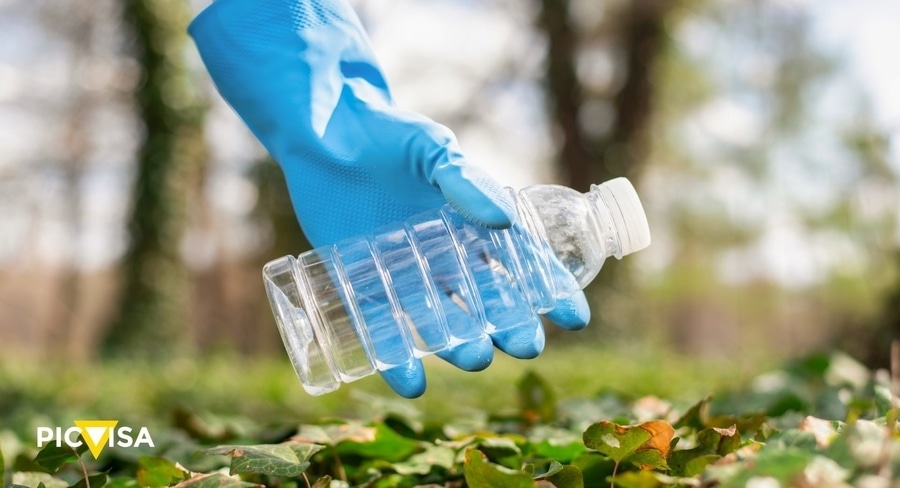
How should I recycle plastic bottles? I will dispose of the used ones in the corresponding bin. This gesture is key to their correct collection and transfer to a recycling center, where, after undergoing a sorting process, they will be treated until they are converted into useful raw material to manufacture new products.
Why does recycling plastic bottles matter?
It reduces pollution, conserves our natural resources and protects the animals and plants that inhabit rivers, seas and oceans, where plastic can take between 100 and 1,000 years to decompose. It also means contributing to the development of the circular economy, to the sustainability of the planet.
What plastic bottles are made of?
They are manufactured in a variety of materials. They are usually made of high-density polyethylene (HDPE), an inexpensive, impact-resistant material that provides a good moisture barrier. Although naturally translucent and flexible, the addition of color can make it opaque. Other beverage bottles are made from low-density polyethylene (LDPE), which is more translucent, less rigid and less expensive than HDPE, although generally less chemically resistant.
For carbonated soft drinks and water bottles, polyethylene terephthalate (PET), with high resistance to impact degradation and tensile strength, is commonly used. PET recycling is on the rise, undoubtedly driven by new European directives requiring PET to be used for new bottles; by 2030, 30% of bottles are expected to be made from rPET.
Polyvinyl chloride (PVC) bottles are used for packaging salad oil, mineral oil and vinegar, as well as shampoos and cosmetic products. With high drop impact resistance, PVC is naturally clear and chemically resistant, although it is vulnerable to solvents.
Bottles made from HDPE, LDPE and PET degrade at temperatures above 71.1° C. When high temperature stable packaging is required, polypropylene (PP) is used. While it has excellent chemical resistance, it is less resistant to the impact of cold temperatures. Polystyrene is used to make small bottles containing dry products such as vitamins, petroleum jelly or spices. The Earth needs us to move as soon as possible from a linear economy to a circular economy. But how is the recycling of plastic bottles managed?
Stage 1: disposal and collection
We accumulate the plastic containers in a bucket that, when filled, we will transfer to the nearest recycling container, in Spain, yellow. And we throw our plastics in waste garbage cans in public places: airports, train stations, buses, fishing docks…
Then, in vehicles such as trucks or vans, depending on the size of the municipality, haulers collect these post-consumer materials and transport them to a materials recovery facility (MRF).
Stage 2: Sorting and preparation at the facilities
In order for the MRFs to sort the different types of plastic, they must first separate them from the rest of the recyclable materials, first by size and shape, then by type of material. To achieve this, all waste – plastics, paper, metals, glass, etc. – are loaded onto a conveyor belt to begin their journey. The materials are placed on the conveyor belt and then sorted, where MRF workers remove non-recyclable materials, such as electrical cables.
Stage 3: processing techniques at the recycling centers
At MRFs, plastic is separated by type (PET, HDPE, PP…) using optical sorters. And if the MRF has a PET bottle recycling plant, two processes will take place. The first is chemical recycling: by means of hydrolysis, pyrolysis, glycolysis, saponification, methanolysis… it manages to depolymerize it. The second, mechanical recycling, involves sorting and separating the containers by color and compacting them into bales made up of plastic particles. These bales or bales are broken down to pass the containers through belts, in order to select the accepted ones and discard foreign materials.
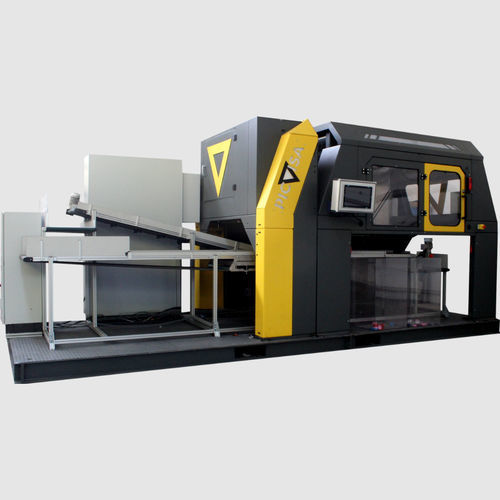
The technologies marketed by PICVISA for the PET plastic recycling industry are a benchmark in efficiency and contemplate various ways of recycling plastic bottles. On the one hand, the ECOPACK optical separator uses the latest technology in artificial vision and intelligence. This makes it possible to automatically classify and separate various types of materials according to their composition (NIR), color (VIS) and shape, through the use of deep learning.
ECOFLAKE optical sorting systems, on the other hand, facilitate the separation of different types of material flakes with outstanding accuracy and efficiency. They use high-definition CMOS RGB cameras combined with NIR technology. The optical sorter is programmed to look for PET plastic. When the sensor detects a PET bottle, a blast of air is released, displacing it over the splitter while the rest of the material falls through.
From flakes to recycled materials
When the bottles are grouped together, they are ground or crushed into small flakes of rPET. These are washed with very hot water, soda and detergent, and then rubbed, eliminating caps and detergent residues. Finally, by pressing and drying, all moisture is removed. Subsequently, an optical selection is made (as our ECOFLAKE system does) in order to remove the colored flakes so that only the transparent ones remain, to make sheets with which to manufacture the new containers.
Products made from recycled plastic bottles
It is possible to make a variety of products from recycled plastic bottles: jugs, new bottles and other plastic containers, plastic lumber, picnic tables, garden furniture, children’s games, recycling garbage cans, T-shirts, bathrobes, flip-flops, jackets, insulation for jackets and sleeping bags, rugs, etc.
How individuals can improve recycling outcomes
Before discarding bottles and jars, it is crucial to empty all food, liquids and other contents. Ideally, they should be rinsed, even if they are not spotless. Ask if your municipality has rules about whether containers should be kept on or uncovered, with lids, caps…. And it is essential to find out how to dispose of a bottle or jar that contained motor oil, herbicides or pesticides.
Environmental and economic impact
Unlike conventional plastics, which are made primarily from non-renewable fossil resources such as petroleum and can take hundreds of years to decompose, sustainable plastic bottles are obtained from renewable sources with low environmental impact. They are known as bioplastics and are made from materials such as biomass, algae, bacteria, corn starch or other renewable natural resources.
They are biodegradable plastics, which means that they can decompose faster and with less environmental impact, especially under proper industrial composting conditions. Whenever we can, let’s choose biodegradable plastics, because a small change can make a big difference.