#Industry News
How are recycling robots using AI to improve waste management?
How are recycling robots using AI to improve waste management?
How are recycling robots using AI to improve waste management?
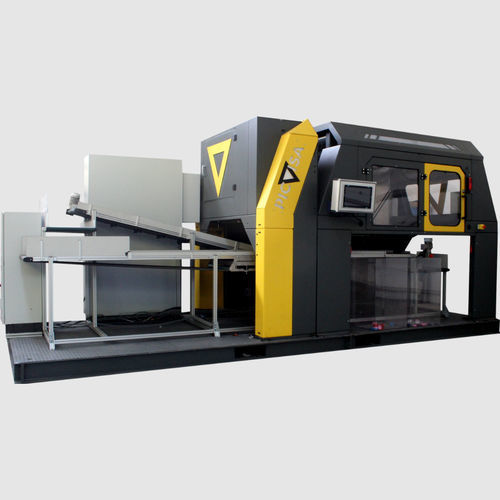
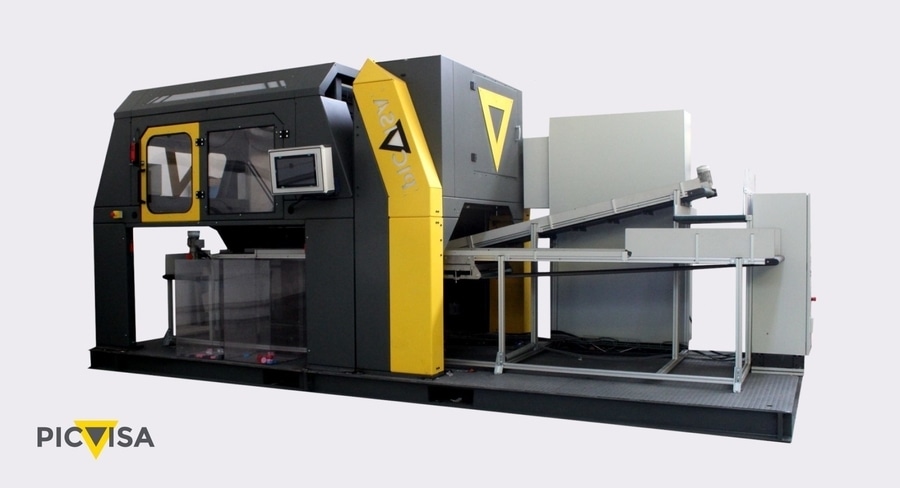
The scale of the task means that manual sorting is slow, costly, and inefficient. However, thanks to technological advances, everything we discard—and that used to end up abandoned in landfills—can now be identified, selected, sorted, and analysed at high speed and with great precision, thanks to optical sorters and recycling robots, some of which already incorporate artificial intelligence (AI), such as those marketed by PICVISA.
These represent a further step in process automation, as they efficiently and effectively carry out thorough quality control at the final stage of the process, something that is still done manually in most cases. In addition, they can handle hazardous items and identify objects with very specific shapes. Work at MRFs is enhanced through human-robot collaboration, as the machines can identify the materials that make up waste items, providing the recycling process with knowledge and capabilities that surpass those of human operators by collecting data to extract useful patterns and make predictions.
The introduction of these robots in the industry could be perceived as a threat due to the potential loss of low-skilled or hazardous jobs. But the reality is that adopting these powerful machines creates new, higher-value jobs related to software coding, network systems, and other technical fields, specialising in the maintenance of automated systems. Retraining programmes are also being implemented for affected workers.
Introduction to recycling robots
Equipped with sensors, grippers, and even visual systems, AI-powered recycling robots are programmable machines that can execute automated tasks controlled by software programmes or recycling bots. These bots are designed by programming experts who write specific lines of code that implement algorithms to automate the desired tasks or processes for the robots to carry out in virtual environments.
These bots continue to improve thanks to machine learning, as they can extract knowledge from data using techniques such as neural networks. This allows them to be trained to detect the composition, shapes, colours, and textures of objects and to learn, with human supervision, to separate different types of waste, ultimately improving the quality of the recovered material.
How do recycling robots work?
Engineers developing AI and computer vision recycling robots, such as those marketed by PICVISA, continue to improve their speed, dexterity, and ability to handle a wider variety of object shapes and sizes. In addition to helping reduce costs by automating manual sorting operations, their robust technology—easily installed over existing waste streams—is key to ensuring the profitability of MRFs and achieving the best return on investment in innovation. Data supports the benefits of using AI-powered recycling bots like PICVISA’s:
They operate at high speed, with incredible precision and uninterrupted 24/7 performance.
They often outperform human workers with lower error margins.
They sort 1,600 items per hour with 92% purity.
They deliver high-quality results with up to 33,000 items collected per 10-hour shift.
They achieve 35–50 picks per minute, selecting specific recyclable materials or waste types.
They enable automated extraction of valuable materials from the reject stream via conveyor belts.
They can separate and remove contaminants from split-stream waste lines—i.e., after sorting into categories. For example, in glass: separating bottles from jars; in paper and cardboard: newspapers from magazines and boxes; in metals: cans from aerosols, etc.
Operators can configure AI robots to identify data-based patterns, enabling predictive analytics.
AI allows for the establishment of KPIs, daily alerts, notifications, and more.
In short, intelligent robotics is a game changer for waste management: reducing costs, increasing detection rates and material purity, and improving safety by relocating human operators to lower-risk roles. AI is significantly improving detection accuracy, enhancing material quality, and cutting expenses.
Real-World applications and case studies
With the help of AI technologies, leading organisations in the sector are optimising waste collection, improving recycling processes, and reducing environmental impact. PICVISA offers cutting-edge technology such as ECOPICK, designed to boost efficiency and quality in waste sorting and selection at recycling plants. Other companies in the market also stand out for their innovative solutions, helping to improve the recovery of recyclable materials and reduce reliance on virgin resources.
Como utilizan la IA los robots de reciclaje para mejorar la gestion de residuos
Driven by AI breakthroughs, the waste management industry is undergoing an unprecedented transformation: robots guided by computer vision systems and machine learning algorithms, high-resolution cameras, hyperspectral imaging, near-infrared sensors, and predictive analytics. Continuous progress is being made, and robotic waste sorting is improving rapidly. Let’s look at some of the types of items AI recycling robots can handle:
Uniquely shaped containers
For example, Rhinomer seawater nasal spray bottles and coffee capsules. These capsules—especially aluminium ones—can be recycled separately, and the leftover coffee can be composted. PICVISA collaborates with the Small Plastics Recycling Alliance, founded by Nestlé through Nescafé Dolce Gusto. Their pilot project involved installing an AI-powered robot from PICVISA in the fine materials reject line of the light packaging sorting plant in Picassent (Valencia), operated by Vaersa.
Pharmaceutical and healthcare waste
Collected from Sigre points, clinics, and hospitals, this waste is taken to specialised sorting facilities. Biotran, located in Tudela de Duero (Valladolid), is a world-leading facility where automation ensures full traceability of waste. To achieve this, it uses ECOPICK from PICVISA, an AI-powered robot that can identify and sort a wide variety of waste materials. This enables recycling of packaging materials (cardboard, paper, plastic, glass, metals, etc.) and ensures that leftover medicines are handled by specialist disposal services. ECOPICK is equipped with a special Ø20mm suction cup, configured to separate eight different materials with up to 95% purity. Installation involves four phases: commissioning, dataset validation, performance testing, and guarantee table verification.
Electronic devices
Robots with computer vision can identify valuable metals in electronic waste based on shape, colour, and material. This is difficult for humans due to the mixed nature of e-waste. Robotics firm Molg sells robotic arms powered by AI that can disassemble electronic devices, making it easier to sort recyclable parts.
Hard-to-recycle plastics
Plastic recycling is challenging because many types cannot be mixed and require different treatments for reuse. The U.S. National Institute of Standards and Technology (NIST) uses infrared spectroscopy with AI robots to identify specific plastic signatures and separate them accordingly.
Paper, metals, glass…
AI-powered robots, equipped with cameras, sensors, and spectroscopy, can now rapidly identify various materials: paper, metals, glass, and plastics.
AI can recognise materials visually and analyse their chemical composition. These robots can even identify brand names on items, a breakthrough that could lead to greater accountability for unsustainable practices. Furthermore, machine learning enhances these AI systems so they can adapt to new materials.
Every country faces major challenges in optimising waste collection, improving recycling processes, and minimising environmental impact. Fortunately, as recycling rates rise worldwide, AI-powered recycling robots are set to play an increasingly important role. In fact, companies already using them are closer to shifting from a linear economy to the urgently needed circular economy—a model that makes human activity more sustainable.
Investing in AI recycling bots is cost-effective. And the future looks bright: AI will help monitor facility performance by capturing data at any point in the recycling stream. Organisations that implement AI-powered recycling robots early will gain a competitive edge in an increasingly demanding market.