#Product Trends
What Are the Different Types of Infrared Sensors?
Introduction of different types of IR sensors including working principles, material composition, and performance in various applications.
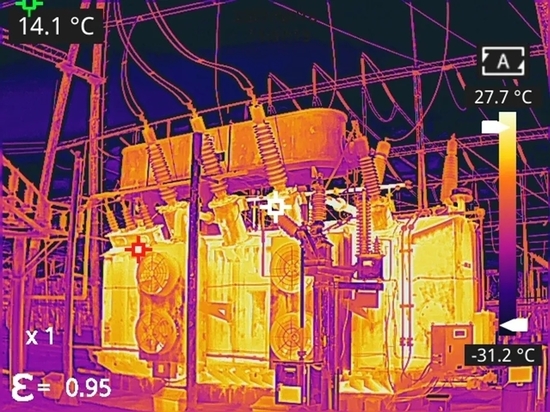
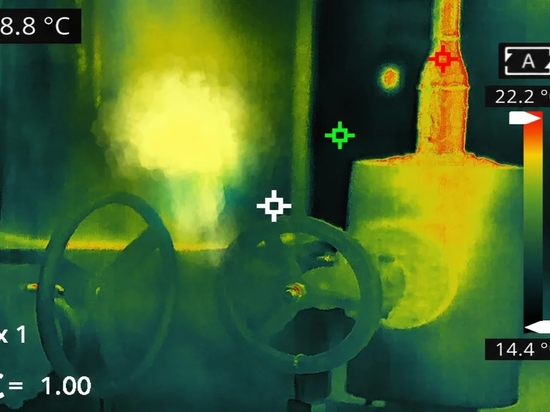
As infrared technology continues to evolve, infrared sensors—the core components of infrared systems—have been widely applied in security surveillance, industrial inspection, and medical diagnostics. These sensors can convert invisible infrared radiation into measurable electrical signals, essentially giving humans a pair of eyes to see temperature.
However, there are different types of IR sensors, each with distinct characteristics in terms of working principles, material composition, and performance in various applications. To help readers better understand the field of infrared sensing, this article will explain the types of infrared sensors, focusing on photon infrared sensors and thermal infrared sensors. We’ll explore their basic principles, key materials, and application advantages to provide a comprehensive guide to the types of thermal imaging technology.
1.What Is Infrared Radiation?
Before diving into the different types of infrared sensors, it’s essential to understand what infrared radiation is. Infrared radiation is a type of electromagnetic wave located between visible light and microwaves on the electromagnetic spectrum. Like radio waves, visible light, and X-rays, it belongs to the broader category of electromagnetic waves. Because its wavelength lies just beyond the red end of the visible light spectrum, it is called “infrared” (IR).
Infrared radiation spans a broad range of wavelengths—from approximately 0.8 to 1000 micrometers—and serves as a vital carrier of information. In infrared sensing technology, the IR spectrum is commonly divided into near-infrared (NIR), mid-infrared (MIR), far-infrared (FIR), and extreme infrared based on how it propagates through Earth’s atmosphere.
Infrared radiation carries a wealth of physical information that helps us better understand the world around us. However, since the human eye cannot directly perceive IR radiation, we rely on specialized devices—called infrared sensors or IR detectors—to convert this invisible radiation into measurable electrical signals. This makes it possible to observe and apply infrared sensing technology across various fields.
2.Classification and Working Principles of Infrared Sensors
Infrared sensors are the core components in infrared detection and imaging systems. With a wide variety of infrared sensors available, there are several ways to classify them based on different criteria:
·By wavelength response: near-infrared, mid-infrared, far-infrared, and extreme-infrared sensors
·By operating temperature: cryogenically cooled and uncooled infrared sensors
·By structure: single-element detectors, linear array detectors, and focal plane array detectors
·By detection mechanism: photon-type infrared sensors and thermal-type infrared sensors
In this section, we will focus on explaining the working principles and application characteristics of photon infrared sensors and thermal infrared sensors—two of the most important types of IR sensors.
2.1 Photon Infrared Sensors
Photon-type IR sensors are devices that convert incoming light signals into electrical signals based on the photoelectric effect of materials. The electrical properties of a material are primarily determined by the motion of its electrons. When infrared photons hit the surface of the material, they excite the electrons, altering the material’s electrical behavior. This is known as the photoelectric effect.
1. Photoconductive Infrared Sensors
These sensors operate based on the photoconductive effect. Certain semiconductor materials exhibit significant changes in electrical conductivity when exposed to infrared radiation. Infrared detectors made from such materials are called photoconductive IR sensors.
Common materials include:
·Lead sulfide (PbS)
·Lead selenide (PbSe)
·Indium antimonide (InSb)
·Mercury cadmium telluride (Hg₁₋ₓCdₓTe)
·Doped germanium (Ge)
Photoconductive IR sensors have a delayed response due to the relaxation phenomenon, where conductivity takes time to stabilize after radiation begins and to recover once it stops. This leads to a slower response speed compared to other IR detection methods.
2. Photovoltaic Infrared Sensors
Photovoltaic IR sensors operate based on the photovoltaic effect. When a material has an internal electric field, the electron-hole pairs generated by photon absorption tend to move in opposite directions, creating a voltage difference. This voltage can be measured as an electrical signal if an external circuit is connected.
Common materials used:
·Indium arsenide (InAs)
·Mercury cadmium telluride (Hg₁₋ₓCdₓTe)
·Indium antimonide (InSb)
Compared to photoconductive types, photovoltaic IR sensors typically offer faster response speeds and are more suitable for high-speed detection applications, as the photovoltaic effect is a minority carrier process.
3. Photoemissive Infrared Sensors
Photoemissive IR sensors utilize the photoemission effect. When photons with frequency vvv strike the surface of a solid, electrons may absorb the energy (hv) and gain enough kinetic energy to overcome the surface potential barrier, escaping into a vacuum as photoelectrons.
Although photon-type sensors offer advantages such as fast response, compact size, high reliability, and strong adaptability, they are sensitive to thermal noise. At room temperature, thermally excited electrons can increase dark current and degrade performance. Therefore, these sensors often require cryogenic cooling to operate at their best, which increases system cost and complexity.
Despite this, photoemissive infrared sensors remain widely used in high-end applications due to their exceptional sensitivity and response speed, making them ideal for advanced thermal imaging technologies.
2. 2 Thermal Infrared Sensors
Unlike photon-type IR sensors, which convert photon energy directly into photoelectrons via the photoelectric effect, thermal infrared sensors rely on the thermal effects of infrared radiation. They detect infrared energy through temperature changes and its conversion into other physical quantities. There are three main types of thermal IR sensors: pyroelectric infrared sensors, thermopile infrared sensors, and microbolometer infrared sensors. Among them, microbolometers are the most rapidly developing and promising type, offering excellent performance in modern thermal imaging technologies.
1. Pyroelectric Infrared Sensors
Certain crystalline materials, such as triglycine sulfate (TGS) and barium strontium titanate (BST), exhibit the pyroelectric effect. When these materials are sliced along specific axes and sandwiched between electrodes to form a capacitor, any temperature change in the crystal causes a voltage to appear across the capacitor. This is due to spontaneous polarization and surface charge displacement triggered by temperature variations.
Pyroelectric materials fall into three categories: single-crystal, ceramic, and thin-film pyroelectrics. Among them, BST ceramic materials are widely used thanks to their mature fabrication process and excellent performance.
Pyroelectric IR sensors offer wide spectral response, stable room-temperature operation, fast response speed, low noise, and relatively simple readout circuits. However, because they require a mechanical chopper to modulate incoming radiation, imaging systems based on pyroelectric sensors tend to be more complex than those using thermopiles or microbolometers.
2. Thermopile Infrared Sensors
Thermopile IR sensors operate based on the Seebeck effect, a thermoelectric phenomenon where a voltage is generated due to a temperature difference between two junctions made of dissimilar conductors or semiconductors. When one end of the thermocouple is heated by infrared radiation and the other remains cool, the resulting thermal gradient drives charge carriers, creating a measurable voltage across the open ends.
While thermopile IR sensors are simple and reliable, they typically have lower sensitivity and slower response speeds compared to other thermal infrared detectors, limiting their competitiveness in high-performance applications.
3. Microbolometer Infrared Sensors
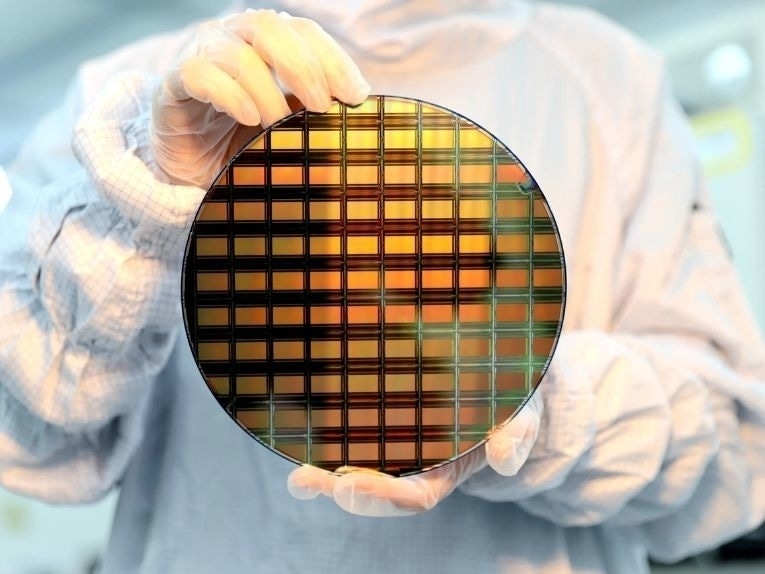
Microbolometers (also called resistive thermal detectors) detect infrared radiation based on the temperature-dependent resistance changes of thermal-sensitive materials. These materials are commonly fabricated as thin films. While metal films have low temperature coefficients of resistance (TCR) and are mostly used in early prototypes, semiconductor films such as vanadium oxide (VOx) and amorphous silicon (a-Si) offer higher TCR and have become mainstream in microbolometer fabrication.
High-performance uncooled infrared focal plane arrays (IR FPAs) are mainly based on pyroelectric and microbolometer technologies. Compared to pyroelectric sensors, microbolometers offer several advantages:
·Easier to mass-produce and integrate
·Lower manufacturing costs
·Longer lifespan
·Reduced image blur and ghosting
·Faster response time
·Wider dynamic range
·Higher thermal sensitivity
As a result, microbolometers have become the preferred choice in many thermal imaging applications that require accurate and efficient infrared detection.
3. Photon vs. Thermal Infrared Sensors
When comparing the different types of IR sensors, photon infrared sensors and thermal infrared sensors each have distinct characteristics and application advantages.
**Photon Infrared Sensors
Photon detectors are highly sensitive to both operating temperature and wavelength. Their key characteristics include:
1.Detection performance is highly dependent on operating temperature – lowering the sensor’s temperature significantly improves its detectivity.
2.Detection rate increases as the wavelength decreases – at the same temperature, shorter wavelengths result in higher detector sensitivity.
As a result, photon-type infrared sensors are widely used in high-performance cooled infrared systems, especially in the mid-wave infrared (MWIR) and long-wave infrared (LWIR) ranges, as well as in some high-performance short-wave infrared (SWIR) applications, whether cooled or uncooled.
**Thermal Infrared Sensors
In contrast, thermal IR sensors exhibit relatively flat detectivity across different wavelengths and respond slowly to temperature changes. Their main characteristics include:
1.Detectivity is stable across a wide wavelength range, meaning performance does not significantly fluctuate with wavelength.
2.Low sensitivity to temperature variation, indicating that cooling has minimal impact on performance.
These traits make thermal detectors especially advantageous in uncooled long-wave infrared applications, where stability, simplicity, and cost-efficiency are prioritized.
In summary, photon infrared sensors excel in high-end, precision applications due to their fast response and high sensitivity, but typically require cooling and come with higher costs. Meanwhile, thermal infrared sensors are ideal for cost-effective, large-scale deployments, offering long lifespan, no need for cooling, and stable performance—making them well-suited for civil, industrial, and consumer markets.
4.Recommended Products by Raythink
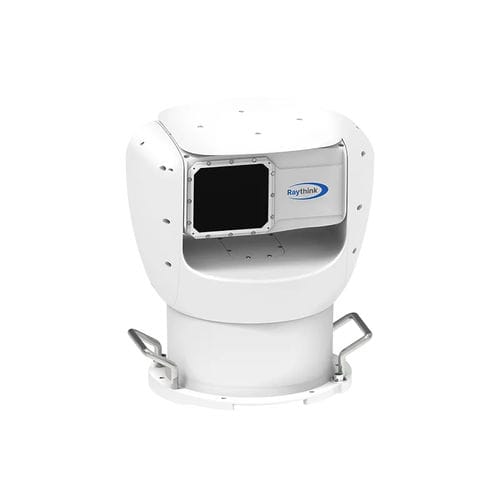
For users seeking reliable, cost-effective, and maintenance-free infrared monitoring solutions, we highly recommend our range of uncooled thermal imaging devices. These products utilize advanced thermal infrared sensor technology and are ideal for various industrial, security, and surveillance applications.
**Silent W-U6 Series Infrared Panoramic Camera
·Designed for forest fire prevention and perimeter surveillance
·Dual thermal and visible light imaging system
·NPU-powered AI-ISP for enhanced low-light performance
·Intelligent detection of humans, vehicles, vessels, smoke, and fire
**FC125T Dual-Spectrum Turret Camera
·Combines infrared thermal imaging and HD visible light
·Features advanced passive infrared thermal detector
·Multiple alarm linkage functions for real-time alerts
·NPU-powered AI-ISP for enhanced low-light performance
·Intelligent detection of humans, vehicles, vessels, smoke, and fire
·Built-in smoke and fire detection algorithms
·Dual-spectral behavior analysis capabilities
**PD464T Dual-Spectrum Speed Dome Camera
·640×512 thermal resolution with 50mm motorized lens
·Integrated 37× optical zoom visible light camera
·High-speed PTZ design for fast, long-range monitoring
·Built-in intelligent algorithms for object classification and recognition
** PC5 Series Multi-Spectrum PTZ Camera
·Designed for forest fire prevention and perimeter surveillance
·Dual thermal and visible light imaging system (up to 150mm thermal lens)
·Optional laser rangefinder and laser illumination
·Intelligent recognition of humans, vehicles, vessels, smoke, and fire points
5.Conclusion
Raythink is deeply dedicated to advancing infrared night vision, infrared temperature measurement, gas imaging, and laser sensing technologies. With a commitment to innovation, we provide global customers with professional infrared and laser sensing components, complete systems, software platforms, and intelligent industry solutions.
Our comprehensive product portfolio is widely applied across a variety of sectors, including smart industry, intelligent robotics, gas detection imaging, fire safety, renewable energy, carbon neutrality, environmental protection, and medical health.
We welcome you to connect with Raythink to explore the endless possibilities of infrared sensing technology and thermal imaging solutions. Let’s shape a smarter, safer, and more sustainable future together.