#Product Trends
Working Principles and Types of Infrared Focal Plane Arrays
Cooled vs. Uncooled IR FPAs: Key Differences, Materials, and Performance Comparisons
1.Basic Working Principle
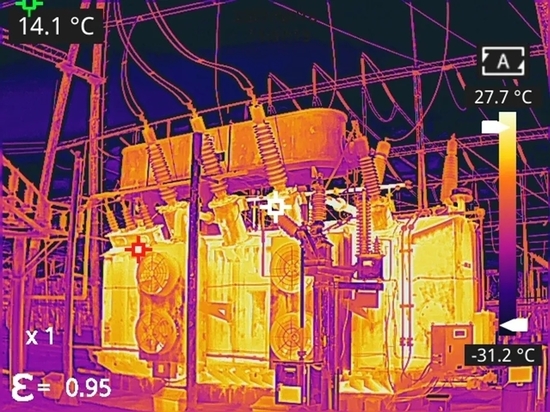
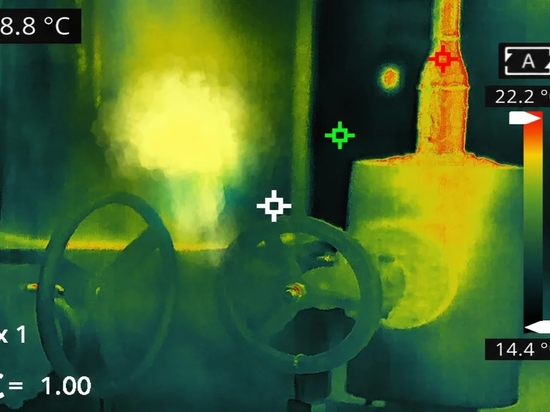
An infrared focal plane array (IR FPA) integrates photoelectric conversion and signal readout processing. It is composed of infrared sensing elements arranged in a specific pattern and a signal processing unit. Incident infrared light is focused onto the sensing elements by the optical system. The sensing elements convert the received infrared radiation energy into electrical signals through photoelectric conversion. The signal processing unit is responsible for integrating, amplifying, sampling, and holding these electrical signals. Finally, these signals are sent to the monitoring system via an output buffer and multiplexing system, enabling the display of an infrared image corresponding to the actual scene.
2.Types of Infrared Focal Plane Arrays
Infrared focal plane arrays (IR FPAs) can be classified as either cooled or uncooled based on their cooling requirements.
· Cooled Infrared Focal Plane Arrays
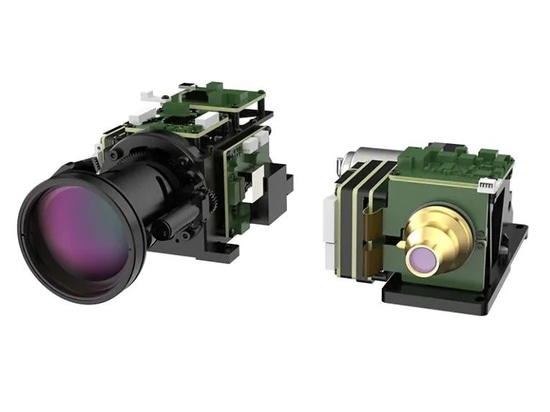
Cooled infrared focal plane arrays are based on cryogenic cooling technology and photon detection principles. They require a cooling device to maintain a low-temperature environment to achieve high performance. Cooled IR FPAs offer high sensitivity and long detection range, excelling particularly in applications such as target search and tracking, satellite remote sensing, and high-end scientific research. However, due to the constraints of cooling equipment and materials, cooled IR FPAs have higher costs and power consumption.
Core Materials
Cooled IR FPAs are primarily made from two types of materials: Mercury Cadmium Telluride (HgCdTe) and Indium Antimonide (InSb). Of these, HgCdTe has become the dominant material for high-performance infrared detectors due to its wide spectral response, excellent integration capabilities, and suitability for space-based remote sensing. InSb, often employing flip-chip interconnect technology, is particularly well-suited for detecting 3-5 μm infrared radiation due to its higher carrier mobility, making it perform exceptionally well in dynamic target search and tracking tasks.
·Uncooled Infrared Focal Plane Arrays
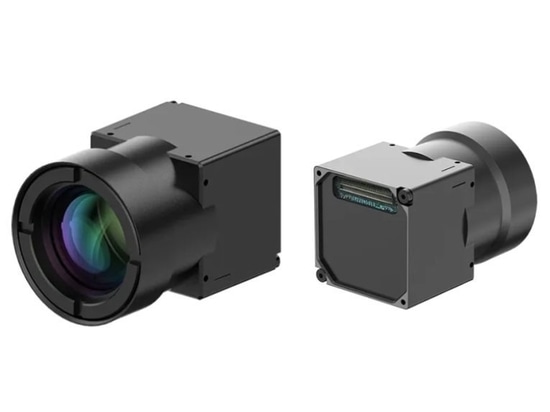
Uncooled infrared focal plane arrays (IR FPAs) consist of pyroelectric detectors or microbolometers along with corresponding circuits and systems. They do not require a cooling device and can operate at room temperature. Compared to cooled infrared focal plane arrays, uncooled types offer distinct advantages in terms of size, cost, and lifespan, making them particularly suitable for civilian applications where portability and cost-effectiveness are key, such as industrial inspection, security monitoring, assisted driving, and consumer electronics.
Core Materials
Currently, the development of uncooled infrared focal plane arrays primarily focuses on the 8-14 μm long-wave infrared (LWIR) band. Their performance largely depends on the selection of the thermal sensing material. Among the materials used, Vanadium Oxide (VOx) is widely recognized for its excellent sensitivity and temperature measurement accuracy. Amorphous Silicon (α-Si), due to its mature manufacturing process and suitability for large-scale production, also holds a significant market position.
3.Cooled vs. Uncooled Infrared Focal Plane Arrays
Cooled and uncooled infrared focal plane arrays (IR FPAs) differ in structural design, key materials, and manufacturing processes, leading to differences in their suitable applications. The key distinctions lie in several aspects:
(1) Sensitivity: Cooled IR FPAs must operate in a low-temperature environment to suppress noise and dark current caused by thermal excitation, achieving higher detection sensitivity and image quality. In contrast, uncooled IR FPAs operate at room temperature and, while not requiring a cooling system, are generally less sensitive and reliable.
(2) Price: Cooled IR FPAs are more expensive due to their reliance on cryogenic cooling systems and the complex manufacturing processes for their core materials. In comparison, uncooled IR FPAs do not require cooling components, have lower manufacturing costs, and are therefore more cost-effective.
(3) Lifespan: The lifespan of cooled IR FPAs is often limited by the reliability of the cooling mechanism, resulting in a relatively shorter operating life. Uncooled IR FPAs, having a simpler structure and no mechanical cooling units, generally have a longer overall lifespan. However, their sensitivity can decrease as components age.