#Product Trends
MZS and MZC: Reproducible Precision Clamping for High-Accuracy Machining Processes
Controlled clamping force transmission, minimal jaw lift, and thermal stability create lasting process stability in high-precision manufacturing
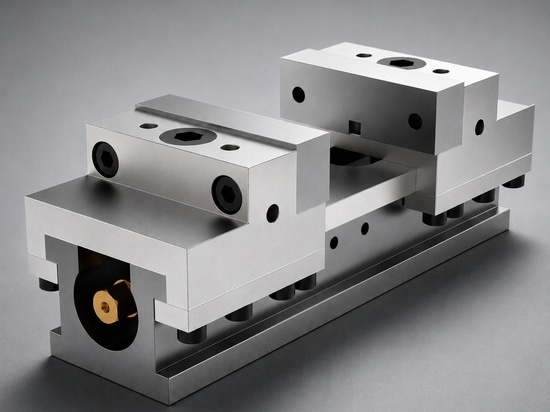
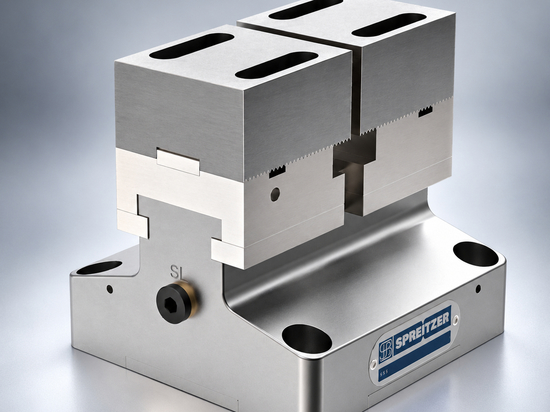
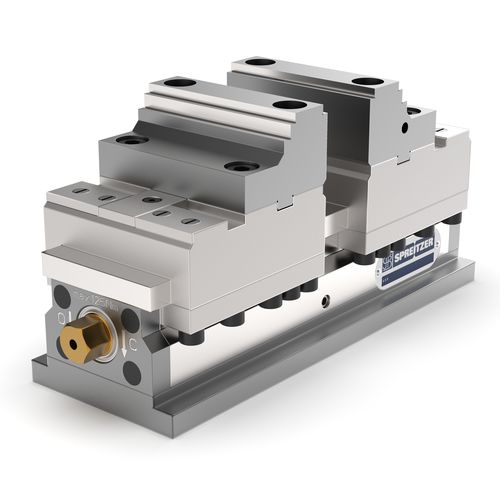
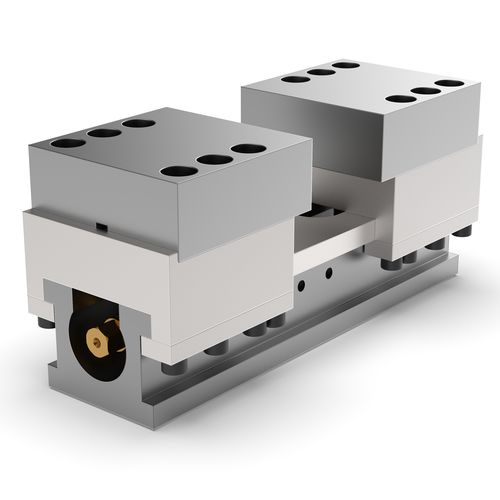
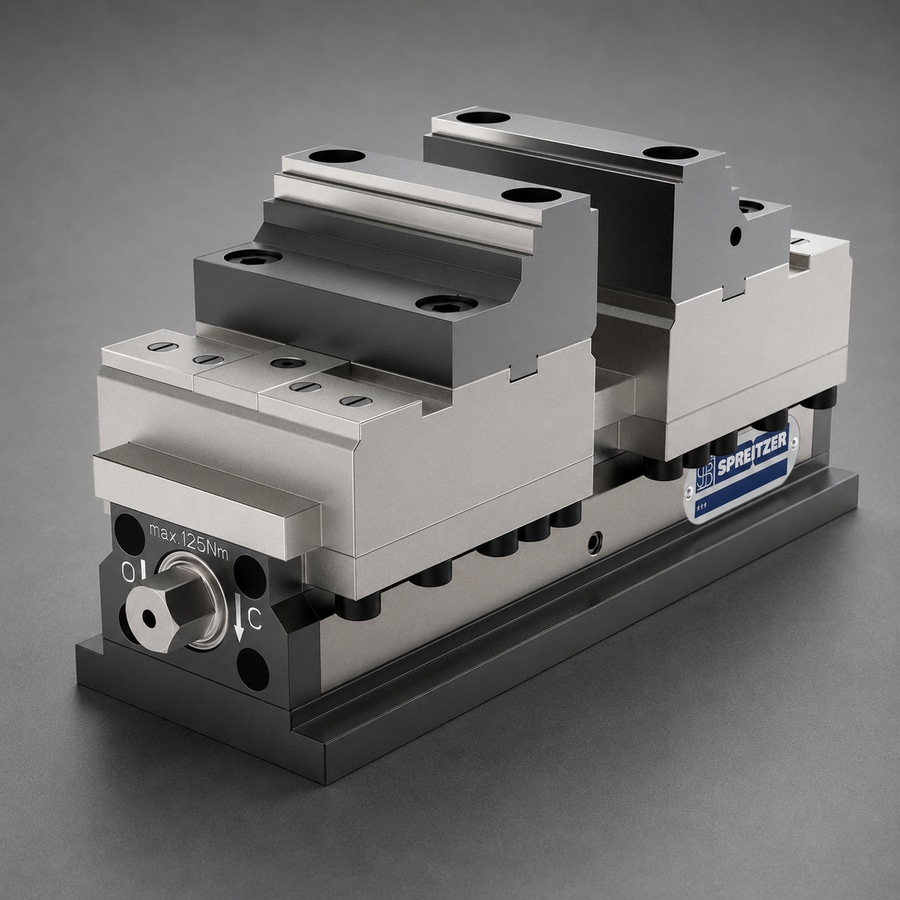
When quality assurance in modern precision manufacturing is discussed, the focus is typically on machine accuracy, metrology, and CAM strategies. However, the actual foundation of reproducible high-precision machining begins elsewhere: at the workpiece clamping stage. Even the most advanced machining centers can only fully realize their capabilities when workpieces are positioned reproducibly, clamping forces are transmitted in a controlled manner, and process conditions remain consistently stable. It is precisely for these requirements that Spreitzer developed the MZS and MZC precision clamping systems.
A central characteristic of both systems is the distinction between maximum and controlled clamping force. High-precision machining processes do not require the highest possible clamping force, but rather a reproducible, defined force transmission that minimizes workpiece deformation while maintaining stable process conditions. Particularly for thin-walled components, sensitive precision geometries, and materials with low inherent rigidity, uncontrolled clamping force is a frequent cause of dimensional deviations, surface changes, and process fluctuations. MZS and MZC address this problem through controlled clamping force transmission and minimized jaw lift: workpiece movement during the clamping process is reduced to a minimum, preventing parallelism deviations, positional changes, and stress redistributions within the component.
Another critical factor in precision manufacturing is the thermal stability of the clamping system. Fluctuating temperatures in the machining process, varying heat inputs from cutting and coolant, as well as thermal expansion of tool and workpiece, measurably affect clamping force transmission and workpiece position. MZS and MZC are designed for thermally stable process conditions and maintain reproducible clamping conditions even under varying thermal loads. This is particularly relevant for long series production processes and automated manufacturing environments, where process fluctuations can accumulate across many workpieces and shifts.
The long-term stability of the clamping mechanism plays an equally decisive role in high-precision series production as initial accuracy. Modern precision processes do not require one-time accuracy, but rather permanently reproducible results across hundreds or thousands of clamping cycles. Even minimal changes in clamping mechanics, workpiece guidance, or vibration behavior can measurably affect surface quality, repeatability, and process reliability. Particularly in micro-machining, hard machining, and high-precision milling — where even the smallest micro-vibrations in the clamping process become visible — the importance of mechanically stable and long-term durable clamping systems becomes evident.
The application range of MZS and MZC covers precision milling, hard machining, micro-machining, and demanding multi-sided machining in sectors such as aerospace, medical technology, tool and die making, and high-precision series production. Developed and manufactured by Spreitzer in Rottweil, MZS and MZC extend the company's clamping technology program with systems specifically designed for the requirements of permanently stable high-precision processes.