#Product Trends
Torque Display Discrepancy—What to Do When Electric Screwdriver Readings Don’t Match Actual Values
electric screwdriver with torque control, industrial electric screwdriver, torque controlled electric screwdriver
On the shop floor, electric screwdrivers are indispensable tools. Over time, however, a common headache emerges: the torque value shown on the screwdriver no longer matches the true torque measured by a tester. This mismatch can degrade product quality and slow production. The key to solving it is proper calibration.
1. Problem Impact
Over-torque: risks damaging fasteners or components.
Under-torque: risks loosening in service and safety failures.
2. Calibration Is Critical
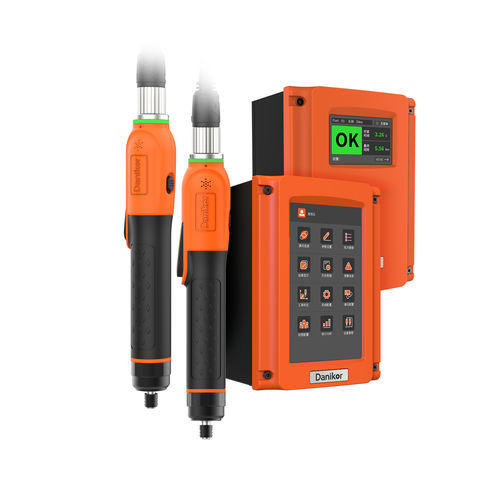
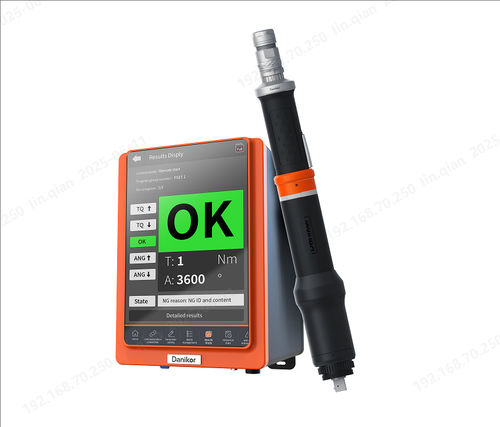
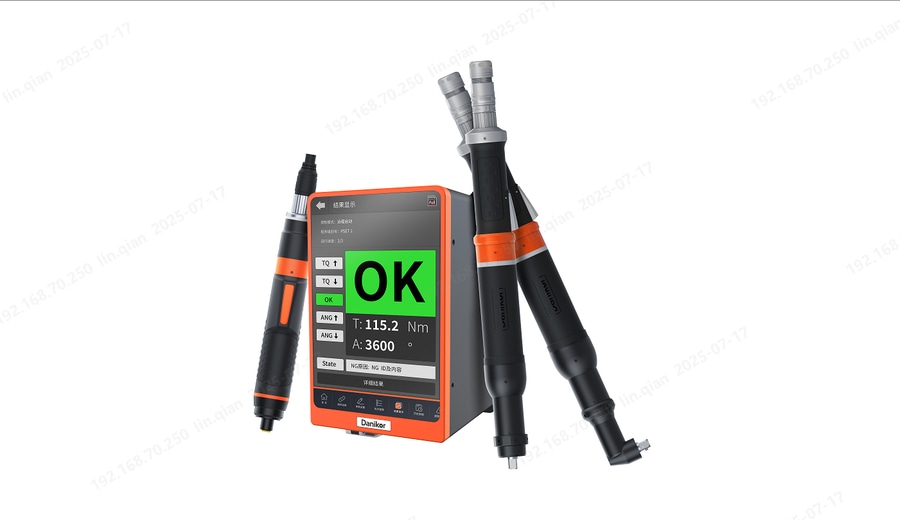
Danikor smart screwdrivers allow users to set a calibration interval (e.g., after every 5,000 cycles). When the preset count is reached, the tool reminds you to recalibrate, keeping production stable and quality consistent.
3. Step-by-Step Calibration
Preparation
Tool: Dynamic torque tester.
Target: Customer’s specified torque value.
Mode: Match the screwdriver’s torque control mode (torque-only, torque + angle, etc.).
Data Collection & Calculation
Record 25 pairs of readings:
– Screwdriver display value.
– Tester actual value.
Compute the torque drift (average deviation).
Derive a new K-factor (correction coefficient).
Validation
Run another 25 cycles with the new K-factor.
Confirm that display and actual values align within tolerance.
Only proceed to production after validation passes.
4. Post-Calibration Benefits
Accuracy: display and actual torque match.
Yield: fewer rejects from over- or under-tightening.
Efficiency: reduced manual checks and rework.
5. Ongoing Maintenance
Daily: wipe dust, inspect cables and connectors.
Weekly: quick torque spot-check on a tester.
As-needed: recalibrate if any drift, vibration, or impact is noticed.