#Product Trends
How Much Does Motor Consistency Affect the Flexible Feeding System for Small Parts?
flexible feeding system, flexible feeder, flexible feeding system for small parts
In today’s assembly, palletizing, sorting, injection-molding and similar industries, products are updated so rapidly that part features change just as quickly. Traditional vibratory-bowl feeders can no longer keep pace with these ever-shifting requirements. At present, most automatic work-piece feeding for robots still relies on either vibratory bowls or manual placement on transfer belts or trays—both approaches have serious drawbacks:
Manual placement
• High labor cost
• No guarantee of part-to-part consistency
• Safety risks
• Difficult to manage; high operator turnover
Traditional vibratory-bowl feeding
• Limited versatility; parts must meet strict shape and size criteria
• High cost and long downtime for bowl change-over and re-tuning
• Long debugging cycles and low efficiency
• Risk of cosmetic damage to parts
• Large footprint; strong vibration prevents direct mounting on precision machinery
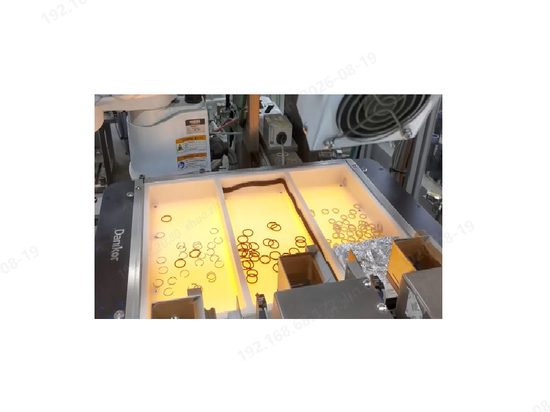
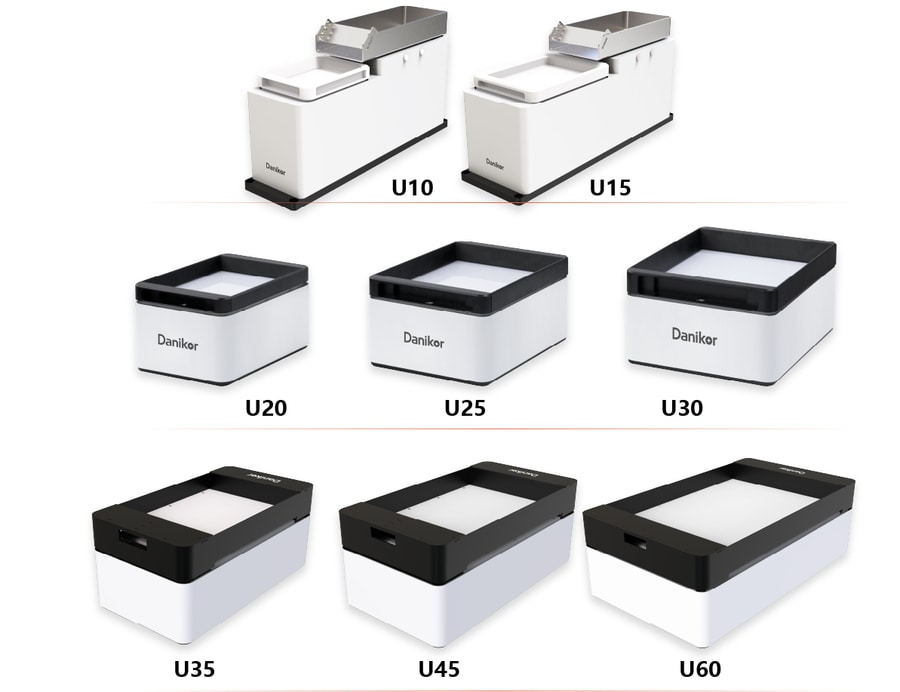
With the rapid development of vision-guided robotic assembly systems, the flexible feeding vibration platform has emerged to satisfy urgent production needs: universal handling of many part types, fast product change-over, and seamless integration with camera-based vision positioning and robot picking. The platform can recognize and control the orientation of incoming parts. By independently adjusting the stroke of four built-in linear motors (one at each corner of the tray), the control system can make parts move forward / backward / left / right and even flip from top to bottom, ensuring that every part remains within the camera’s field of view and in the correct attitude. The system offers:
• Strong controllability
• Quick material change-over without mechanical re-tooling—only software parameters need adjustment
• Reduced labor input and fatigue
• Higher production efficiency
When the robot has emptied the vision area of all correctly oriented parts, the vision controller sends a signal to the linear motors. The platform then re-orients any remaining parts so that no jams, mis-picks, or mixed parts occur. Even mixed lots can be distinguished. The entire process is quick, labor-saving, and requires no mechanical adjustments. Coupled with existing robots and a user-friendly vision interface, the platform can approach “lights-out” factory operation.
Motor consistency in the flexible feeder
The linear motors used in flexible trays are typically sold as sub-assemblies consisting of a permanent-magnet stator and a copper-wire coil mover. The stationary part is the stator; the moving part (either the magnet or the coil) is the forcer. Coils use multi-layer, fully copper magnet wire. Poor motor consistency manifests when motors with identical electrical settings cannot be interchanged or, after swapping, fail to synchronize. Main causes include:
• Magnet size and magnetization method differ from batch to batch, shifting the magnetic center.
• Copper-wire batches vary in diameter and insulation thickness, altering electromagnetic characteristics.
• Variations in bobbin machining also change motor parameters, complicating multi-motor tuning.
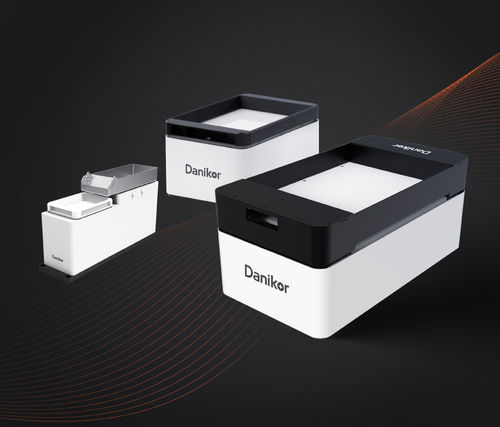
Danikor has established a complete manufacturing and quality-control system for its flexible feeder, flexible part-alignment machines, and related accessories. The product line targets agile production environments that require small-batch, multi-product, quick-change capability. Danikor is dedicated to solving every automatic-feeding challenge and making feeding simple. For more information, please contact us.