#Product Trends
Automotive Seat Assembly One-Stop Solution
automatic screwdriving system, Screwdriving Solution For Automotive Seat Assembly, electric screwdriver manufacturer
In the automotive manufacturing field, the automotive seat, as a core component directly related to the safety and comfort of drivers and passengers, has its assembly quality and efficiency directly determining the overall vehicle production standard. Currently, with the popularization of compact models and the accelerating iteration speed of automotive seats, various pain points in the assembly process are becoming increasingly prominent, severely restricting the high-quality development of the industry. Leveraging profound technical expertise and rich industry experience, Danikor focuses on the entire process of automotive seat assembly, creating a one-stop customized solution covering screw feeding and tightening, high-precision control, and flexible feeding. This precisely addresses industry pain points, helping the automotive seat industry achieve efficient, precise, and flexible production.
Assembly Pain Points:
The automotive seat assembly process is complex, involving multiple key stages. Among these, the pain points in the tightening operation and component feeding stages are particularly prominent, becoming key bottlenecks hindering production line upgrades.
Challenge 1: Narrow Space + Component Interference, Significantly Increasing Bolt Tightening Difficulty
Some tightening positions on the automotive seat frame generally suffer from narrow spaces and component interference. This issue is more pronounced in compact models, directly increasing the operational difficulty of bolt tightening. When using manual or traditional equipment assembly, problems such as poor screw feeding and inaccurate screw positioning are prone to occur, which not only reduces assembly efficiency but may also create safety hazards. Simultaneously, scenarios like seat rails also involve nut tightening needs, further increasing assembly complexity.
Challenge 2: Stringent A-Class Safety Tightening Requirements, High Precision Control Difficulty
Seat bolt tightening is an A-Class assembly task with the highest safety level, demanding extremely high tightening precision and quality. Once tightening anomalies occur, such as insufficient torque, floating height, or thread stripping, they can easily lead to severe safety hazards like seat loosening or detachment. Moreover, traditional tightening tools often struggle to achieve full-process precision monitoring and data traceability, failing to meet modern quality control requirements.
Challenge 3: Obvious Drawbacks of Traditional Feeding Methods, Insufficient Adaptability and Safety
The automatic feeding stage for components like pins and guide rails is crucial in the automotive seat assembly process. Traditional steel pan feeding methods generate intense vibration, easily leading to material wear and affecting component precision. Simultaneously, traditional equipment has poor compatibility, making material changeover difficult. Additionally, they occupy large footprints, which is detrimental to production site layout optimization and makes it hard to adapt to the rapidly iterating production requirements of seats.
Danikor One-Stop Solution:
Targeting the core pain points of automotive seat assembly, Danikor, based on different assembly working conditions, integrates core technologies to provide a "customized + full-process" one-stop solution. From screw feeding and tightening to high-precision control and flexible feeding, it comprehensively addresses industry challenges while balancing assembly efficiency, quality, and flexibility.
Solution 1: Intelligent Screw Feeding and Tightening System, Adapts to Complex Working Conditions, Prevents Tightening Failure
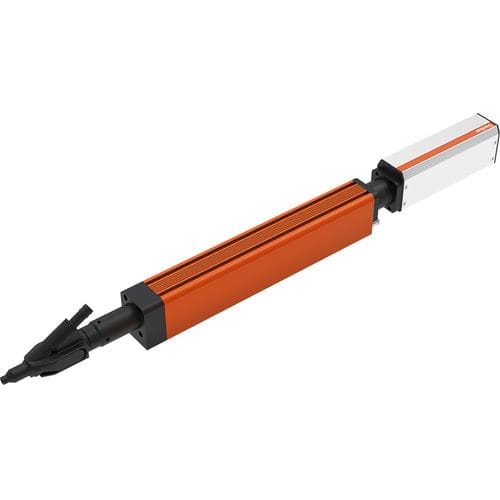
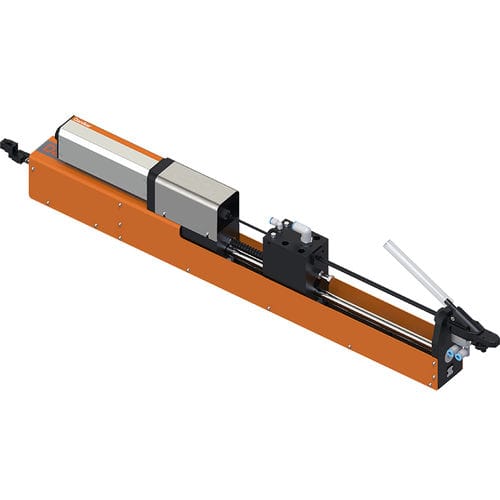
Addressing the pain points of narrow spaces and severe interference at seat frame tightening positions, Danikor employs a stepped screw feeder combined with a vacuum screw pick-up method to create a dedicated screw feeding and tightening solution suitable for various complex assembly scenarios.
This system includes a long/short screw detection module, which can accurately identify screw specification differences, effectively preventing screw mixing and fundamentally avoiding tightening failure issues, ensuring assembly safety. The pick-up module can flexibly adjust the clearance distance based on on-site interference conditions, ensuring smooth screw feeding travel, and completely solving operational difficulties caused by narrow spaces and component interference. Compared to traditional magnetic methods, the vacuum pick-up method is more stable and efficient, significantly improving the success rate and speed of screw alignment, enhancing hole-finding capability, while also monitoring the screw's in-position status in real-time, preventing empty or missed tightening.
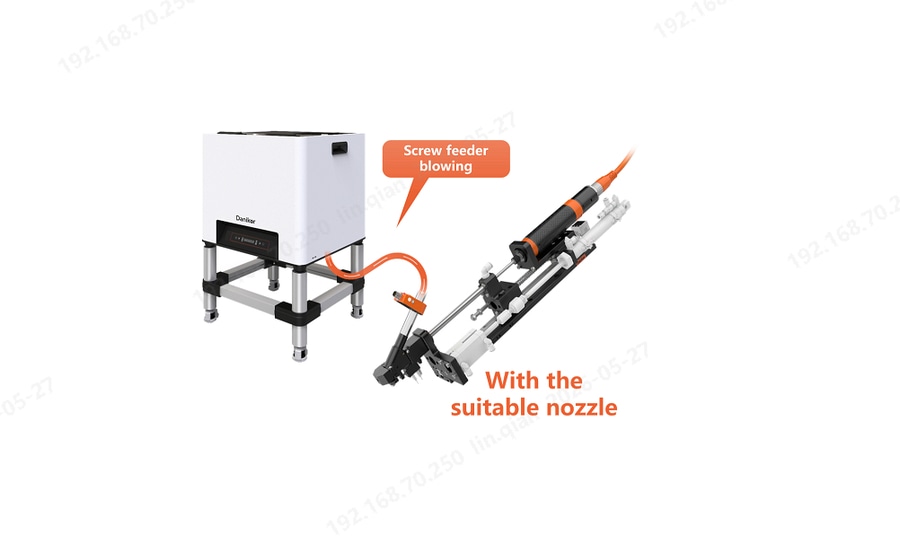
For tightening positions without interference issues, Danikor optimizes using a blow-feed tightening module, whose action logic is simple and response is fast, effectively improving the screw feeding/tightening cycle time and further enhancing assembly efficiency. Furthermore, for scenarios involving nut tightening like seat rails, the stepped screw feeder automatically delivers nuts, combined with a vacuum pick-up method, to achieve fully automated nut assembly, reducing manual intervention and lowering assembly errors.
Solution 2: High-Precision Sensor-Type Tightening Tool, Builds an A-Class Safety Defense
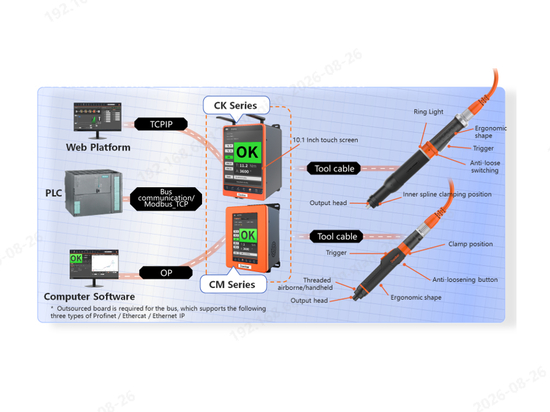
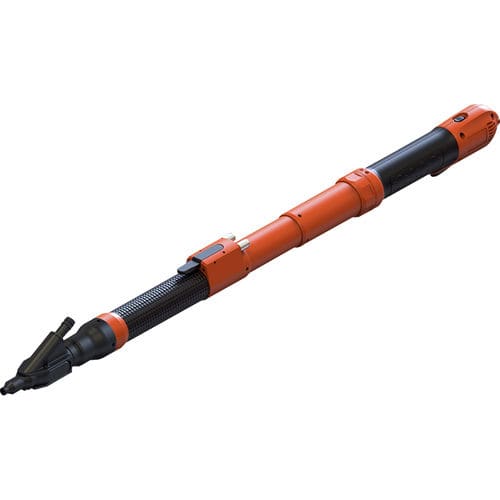
Facing the stringent requirements of A-Class seat bolt tightening, Danikor uses a high-precision sensor-type tightening tool. This empowers assembly quality through precise control, building a defense for occupant safety. This tool enables accurate torque control, significantly improving tightening quality and effectively avoiding issues like insufficient torque or overload.
Simultaneously, the tool incorporates multiple anomaly monitoring strategies. By setting upper and lower limits for torque, angle, or time, it performs real-time monitoring of the entire tightening process, promptly detecting tightening anomalies like floating height or thread stripping, allowing for early detection and handling. Additionally, it possesses comprehensive data recording and storage functions, enabling precise traceability of the tightening status of every screw. This provides robust data support for enterprise assembly quality control, meets the quality traceability needs of modern production, and aids enterprises in achieving refined management.
Solution 3: Flexible Feeding System, Efficient Feeding, Adapts to Multi-Scenario Requirements
To address the drawbacks of traditional feeding methods, Danikor introduces a flexible vibratory bowl feeder solution. Its flexible design adapts to the diverse needs of seat assembly. This system uses a polymer bowl with gentle vibration, achieving damage-free material conveying, effectively preventing material wear issues caused by traditional steel pan methods, thus ensuring component precision.
Simultaneously, the flexible bowl feeder has extremely strong compatibility, capable of handling various shapes, materials, and sizes of components, such as pins, guide rails, etc. It can flexibly meet the feeding requirements of different products and production lines, significantly improving material changeover efficiency. Its compact structural design also saves footprint space, helping enterprises optimize production site layout and improve space utilization.