#Product Trends
The Digital Revolution in the Industry 4.0 Era: Why is the Danikor Nutrunner No Longer Just a "Tightening Tool"?
electric nutrunner, smart electric screwdriver, servo screwdriver manufacturer
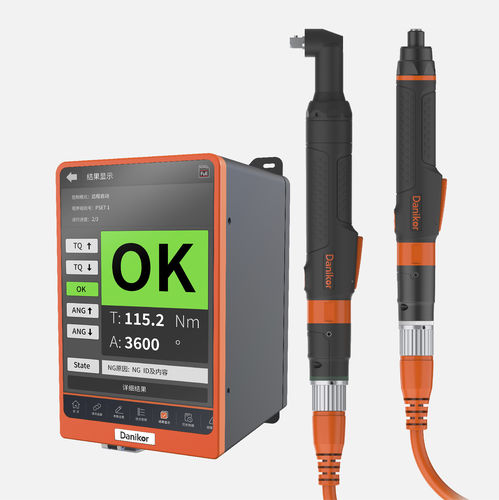
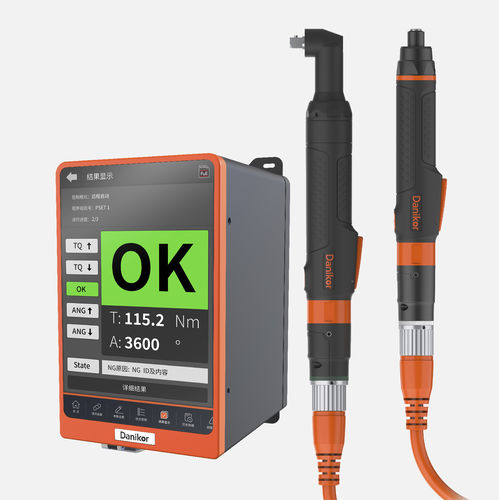
In traditional industrial manufacturing, every process on the assembly line was like an isolated component. In the past, the mission of a nutrunner was very singular: as long as it rotated the bolt to a preset position, its task was complete. Traditional tightening tools could not answer the question of how well that bolt was actually tightened. However, as global manufacturing moves towards the Industry 4.0 era, the logic of the production line has undergone a fundamental shift. The core of a modern intelligent assembly line is not about how much "power" it has, but how smart its "brain" is. Against this backdrop, the Danikor nutrunner has emerged. It has essentially transcended the category of a traditional "tool" and become an edge computing terminal integrating high-precision sensors, controllers, and multiple communication modules. Through data empowerment, real-time diagnostics, and full lifecycle traceability, it redefines the underlying logic of precision manufacturing.
I. The Essential Transformation from "Mechanical Tool" to "Edge Computing Terminal"
Traditional tightening tools (such as pneumatic nutrunners and ordinary electric screwdrivers) are essentially actuators. They rely on mechanical clutches or simple current control to limit output torque. This model has significant limitations:
Information Silo: The tightening process is a black box, unable to output digital data.
Coarse Control: Unable to dynamically perceive minor changes caused by uneven workpiece material, thread defects, or human operational errors.
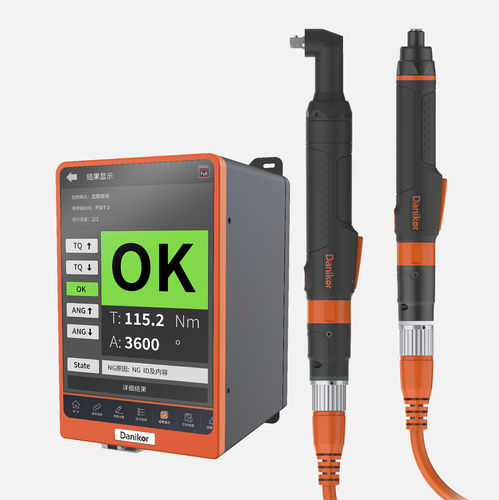
In contrast, the Danikor nutrunner in the Industry 4.0 era is a genuine "edge computing terminal." Within the one or two seconds of a tightening operation, the nutrunner cannot simply rely on waiting for commands from the cloud or a host computer. It must complete the real-time acquisition, processing, and decision-making of massive amounts of data at the "edge" (i.e., within the nutrunner itself or its accompanying controller). The Danikor nutrunner integrates a high-sensitivity torque sensor and an angle encoder. When the spindle begins to rotate, the sensor synchronously captures the dynamic relationship between torque and angle at an ultra-high frequency of milliseconds. This dense sampling frequency means that for every tiny angle the bolt rotates during the screwing-in process, its stress state is digitized. Simultaneously, the device's built-in controller uses cutting-edge control algorithms to perform real-time calculations on this data, achieving a disruptive leap from "passive mechanical stopping" to "active digital control."
II. Seeing Through "Invisible" Assembly Hazards
In precision assembly fields such as automotive manufacturing, new energy battery packs, aerospace, and high-end consumer electronics, tiny physical defects can often lead to catastrophic consequences. For example, if a bolt is cross-threaded during tightening, it might appear to be tightened and reach the preset torque on the surface, but it can easily loosen under vibration. With the millisecond-level data acquisition capability of the Danikor nutrunner, the system can completely plot a "torque-angle curve." This curve is like the "electrocardiogram" of the bolt tightening process. By comparing the curve to a standard in real-time, the Danikor nutrunner can identify various assembly hazards invisible to the naked eye within milliseconds:
False Tightening / Premature Seating: The bolt reaches the preset torque prematurely due to debris jamming, but the actual angle is insufficient. The system instantly detects the angle anomaly and triggers an alarm.
Thread Stripping / Breakage: In the later stage of tightening, the torque does not increase but suddenly drops, or the angle extends indefinitely. This indicates the threads have softened or the bolt has undergone plastic fracture. The Danikor nutrunner immediately cuts power to prevent defective parts from moving to the next process.
Cross-Threading / Tilting: Resistance is too high when the bolt initially engages, causing a steep rise in the torque curve. The system determines thread misalignment, thus protecting the expensive workpiece from damage.
This kind of real-time, data-stream-based quality control moves the inspection step directly to the very front of production, achieving true "online 100% quality inspection."
III. Giving Bolts a "Digital Identity Card": Deep Integration with MES System and Full Lifecycle Traceability
In traditional industrial production, if a quality incident caused by a loosened bolt occurs a few years after a product leaves the factory, companies often face enormous investigation costs. Due to a lack of data, engineers struggle to determine whether the cause was a design flaw, a material batch issue, or an occasional operational error by a production line worker years ago. This ambiguity often leads to large-scale blind recalls, imposing heavy financial and brand losses on the company. On an intelligent production line using the Danikor nutrunner, every critical bolt is given a unique "digital identity card":
Barcode Binding: Before a core workpiece enters the tightening station, a barcode scanner reads the product's unique barcode or QR code (e.g., VIN code, battery pack code).
Process Recording: The Danikor nutrunner executes the tightening. Key indicators generated during the process – peak torque, final angle, tightening time, waveform curve – are packaged in real-time.
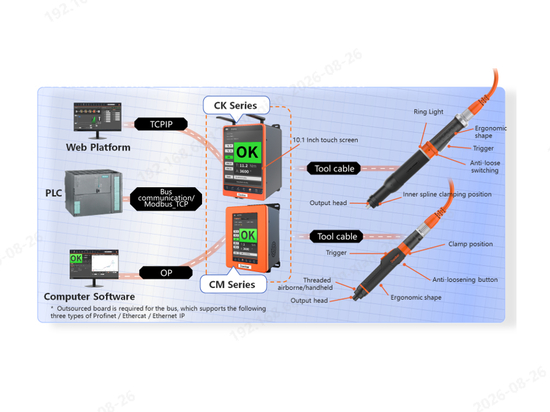
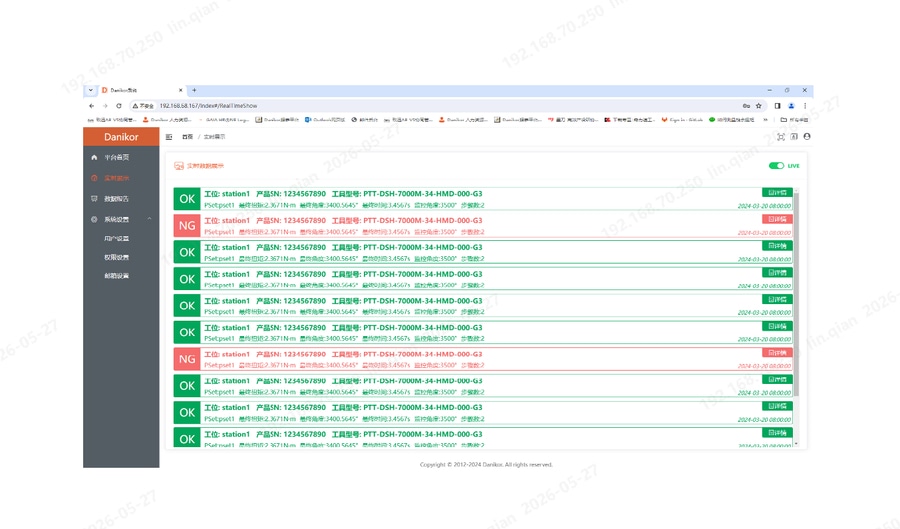
Data Upload: Upon completion, the device accurately uploads this set of tightening data, containing dozens of data points, to the enterprise's Manufacturing Execution System (MES) via industrial Ethernet or wireless communication protocols.
Through this deep system integration, even if a product has after-sales issues years later, a quality engineer simply needs to enter the product's "ID number" into the system backend. They can instantly retrieve the precise assembly data from that specific year, season, day, and even second. Which Danikor nutrunner performed the operation? Was the torque curve regular? Were there any deviations at critical points? Everything is clear at a glance.
IV. Deployment in High-End Manufacturing Scenarios: Practical Value of the Danikor Nutrunner
1. New Energy Vehicle (NEV) Battery Pack Assembly
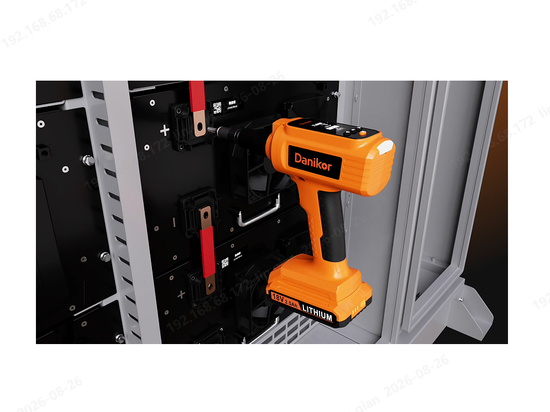
The battery pack (PACK) contains a large number of copper busbar connections and high-voltage electrical components. Any metal debris or insulation damage caused by over-tightening during the tightening process could lead to a short circuit or even thermal runaway. The Danikor nutrunner not only precisely controls multi-stage tightening strategies (e.g., fast running down, slow seating, and final precision torque control) but also monitors the joint characteristics of soft拉伸 (soft joints) and hard connections in real-time, ensuring every electrical connection point is secure and reliable.
2. Automotive Powertrain and Chassis Systems
Engines, transmissions, and chassis suspension components operate long-term in extreme environments with high-frequency vibration and alternating high/low temperatures. Bolts at these stations typically use a "torque + angle" control method, bringing the bolt into the yield zone of its material to achieve maximum clamping force. The high-precision algorithms of the Danikor nutrunner enable extremely stable control of the angle trigger point, ensuring consistent clamping force and preventing chassis loosening or oil leaks due to insufficient clamp load.
3. High-End Consumer Electronics (3C Industry)
Screws in 3C products are tiny, and housings are often made of plastic or thin aluminum alloys, which are prone to thread stripping. The Danikor nutrunner offers precise control capability for micro-torques, significantly improving the yield rate on production lines for high-end smartphones, laptops, and more.
On the surface, bolt tightening remains the most basic and common process in industrial assembly. But essentially, empowered by the digital capabilities of the Danikor nutrunner, this process has transformed into an indispensable source node in the enterprise's data chain. It not only gives every bolt an irreplaceable "digital identity card" but also builds an impenetrable firewall for product quality with millisecond-level data streams. In the increasingly intense future of global manufacturing competition, the company that can seize the data control over underlying processes first will be able to run further on the track of quality and efficiency.