#Product Trends
How fast is Danikor's Flexible Feeder?
flexible feeder, flexible feeding system, anyfeeder
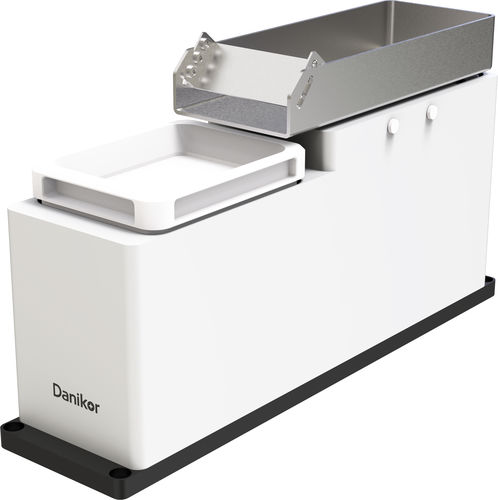
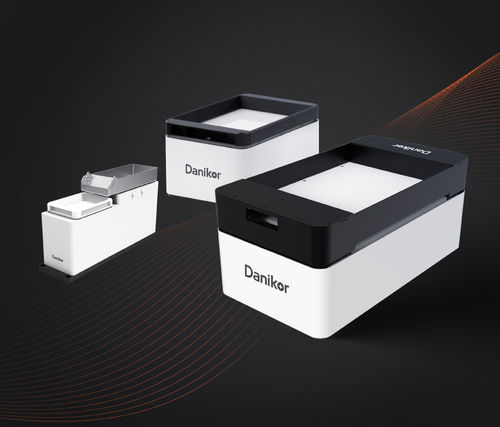
In smart manufacturing fields such as 3C electronics, automotive parts, new energy, and precision hardware, the feeding process, as the first core step of an automated production line, directly determines the entire line's production takt, yield rate, and production cost through its speed, stability, and flexibility. Traditional manual tray loading and old-fashioned rigid vibratory feeder methods can no longer meet the industry's current demands for high-mix, low-volume, high-precision, 24/7 continuous production. Danikor's Flexible Vibratory Feeder, leveraging mature voice coil motor direct-drive technology, a vision positioning system, and a collaborative robot solution, breaks the efficiency bottlenecks of traditional feeding equipment, becoming the core, preferred equipment for efficient and flexible feeding on automated lines.
I. Fast Feeding, Increasing Production Line Takt
When many manufacturing companies upgrade their automated lines, the most critical question they focus on is: How fast can a flexible vibratory feeder feed? Unlike the disadvantages of traditional equipment—low efficiency, stuttering, and unstable takt—Danikor's Flexible Vibratory Feeder, relying on its core technology, achieves high-efficiency, sustainable feeding operations, with feeding speeds ranking at the industry's leading level.
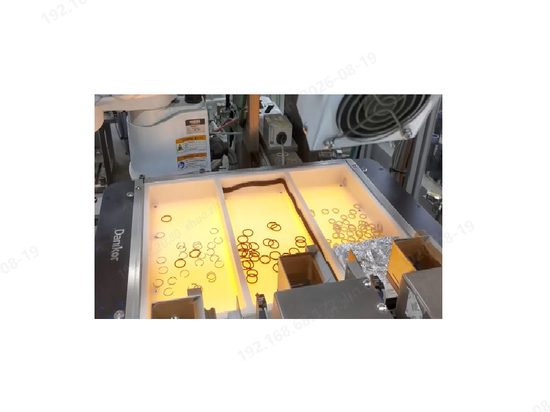
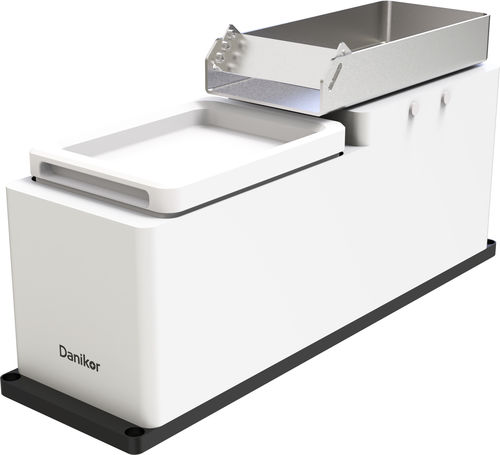
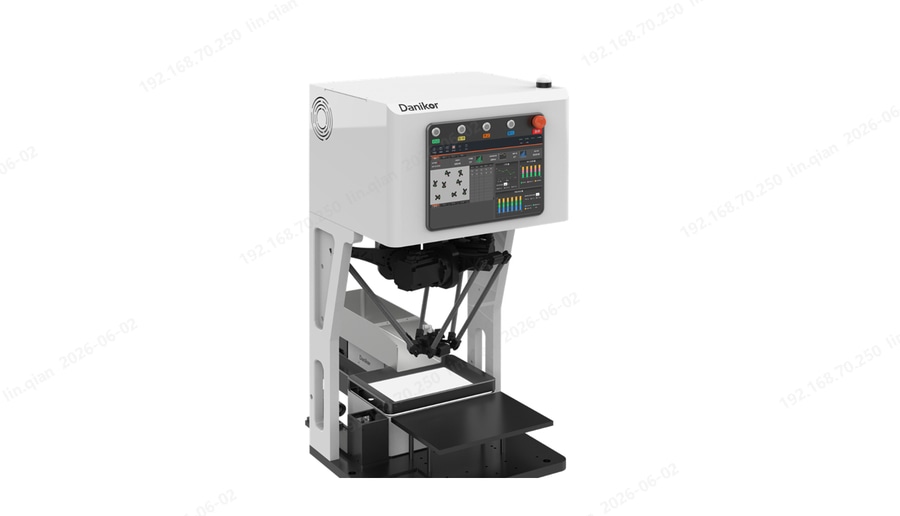
The equipment uses high-performance voice coil motor direct-drive technology, characterized by high response, low inertia, and low heat generation. It eliminates the lag and loss associated with traditional mechanical transmission, enabling rapid scattering and uniform spreading of parts, preventing part stacking, jamming, and clogging, thus laying the foundation for precise picking. Under standard conventional configurations, paired with a dual-bowl alternating feeding + delta robot collaborative solution, the stable feeding efficiency can reach 60-75 picks per minute, continuously delivering a stable takt without frequent stoppages for waiting.
For high-speed mass production scenarios, Danikor's high-speed model Flexible Vibratory Feeder can adapt parameters based on part size and material characteristics, optimizing vibration frequency and picking logic. Under extreme conditions, feeding efficiency can reach several hundred picks per minute, suitable for large-volume, high-takt industrial continuous production needs. Without manual intervention, the equipment can operate efficiently 24/7, completely solving the pain points of inconsistent manual feeding efficiency and low maximum capacity.
II. Micron-Level Precision Positioning, Stable Yield Control Around the Clock
In smart manufacturing, efficiency and precision are inseparable. Manual tray loading, being a highly repetitive task performed over long periods, is prone to decreased focus, hand fatigue, placement deviation, and other problems. This not only leads to low efficiency but also significantly increases the product defect rate, raising rework and repair costs. Danikor's flexible feeding system, relying on a "flexible vibration + high-definition vision positioning + intelligent robot" three-in-one architecture, overcomes the shortcomings of manual work.
As a mature flexible feeding solution in the industry, Danikor's flexible trio of equipment is equipped with high-resolution industrial cameras and AI vision recognition algorithms. It captures part position, angle, and shape in real-time, collaborating with a robot to precisely execute picking and placing operations, achieving a repeat positioning accuracy of up to ±0.1mm. Whether operating for one hour a day or continuously for 24 hours without interruption, the equipment's pick-up force, placement position, and picking accuracy always maintain a consistent standard—zero deviation, zero error. This ensures stable product yield from the source, significantly reducing production waste and quality control costs for the enterprise.
III. Superior Flexible Adaptability, Quick Changeover for High-Mix Production
Modern manufacturing has long moved away from single-category mass production. High-mix, low-volume, and rapid iteration have become the mainstream production model, with product replacement cycles accelerating continuously. Traditional feeding equipment is cumbersome to changeover and has poor compatibility. Manual changeover requires long debugging and adaptation times, severely lengthening production and delivery lead times and failing to meet the need for rapid market response.
Danikor's Flexible Vibratory Feeder features the core advantages of high flexibility, quick changeover, and broad compatibility, perfectly adapting to flexible manufacturing needs. The equipment can handle parts of various materials (metal, plastic, ceramic, electronic components) and specifications, including special-shaped parts and tiny springs, within the size range of 0.1–300mm, without requiring frequent hardware changes.
Compared to the long adaptation period needed for manual handling of new products, Danikor's flexible feeding equipment is ready to use immediately upon changeover—acting as a "skilled worker" instantly. With a magnetic quick-change plate, part type changeover can be completed in just a few seconds, requiring no complex debugging by specialized technicians, greatly shortening the product changeover lead time and new product delivery lead time. Simultaneously, relying on AI self-learning algorithms, it can autonomously identify complex parts with subtle differences in orientation or similar shapes, eliminating the need for repeated manual calibration. This significantly lowers the barrier to changeover operations, adapting to various complex production scenarios like mixed-line production and flexible contract manufacturing.
IV. Dual Empowerment: Cost Reduction and Efficiency Increase, Aiding Enterprise Smart Upgrades
The core objective of automation upgrades for enterprises is, fundamentally, to reduce costs, increase efficiency, and improve quality. Danikor's Flexible Vibratory Feeder is not merely a simple replacement for manual tray loading; it empowers manufacturing enterprises comprehensively across four dimensions: efficiency, quality, cost, and capacity.
Efficiency: The stable feeding efficiency of tens to hundreds of picks per minute far exceeds the manual limit, enabling 24/7 uninterrupted operation and doubling production capacity.
Quality: Micron-level precision positioning eliminates human error, keeping the yield rate consistently stable and reducing rework waste.
Cost: It replaces high-intensity, highly repetitive manual positions, significantly lowering labor, management, and training costs. Additionally, its low-failure, low-maintenance characteristics reduce post-launch operational investments.
Capacity: Its quick changeover capability adapts to flexible changes in market orders, helping enterprises respond quickly to new product demands and seize market opportunities.
Compared to the disadvantages of traditional rigid vibratory feeders—poor compatibility, high jamming risk, difficult changeover, and low precision—Danikor's flexible feeding system, with its core voice coil motor technology, intelligent vision collaboration, and high flexibility adaptability, has become essential equipment for smart manufacturing line upgrades. It is widely used in 3C electronics, automotive parts, new energy, precision hardware, medical devices, and many other industries.
Conclusion
From production efficiency and operational accuracy to flexible adaptability and cost control, Danikor's Flexible Vibratory Feeder completely breaks through the many pain points of traditional feeding methods. Its multiple advantages—extremely fast feeding takt, ±0.1mm ultra-high positioning accuracy, 24/7 stable operation, and one-key quick changeover—not only solve the problems of low efficiency, high error, and high cost associated with manual feeding but also, through an intelligent and flexible feeding solution, provide powerful momentum for improving quality and efficiency on automated lines and enabling flexible production upgrades. It is the core, preferred equipment for cost reduction, efficiency improvement, quality enhancement, and speed acceleration in the new era of smart manufacturing.