#Product Trends
In-line Bottom Emulsifier/Homogenizer
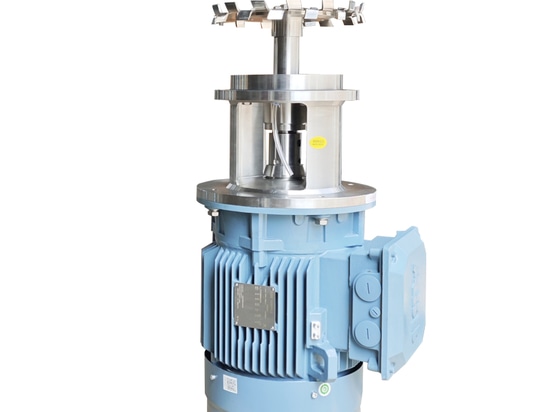
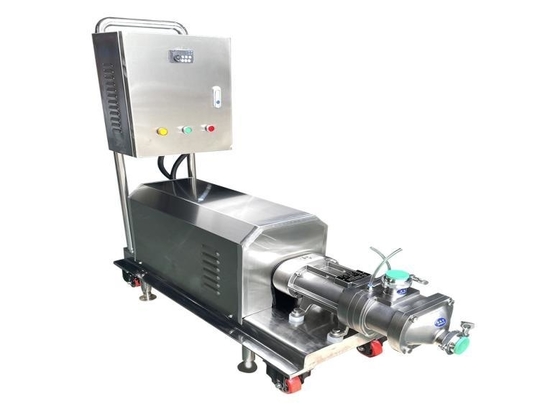
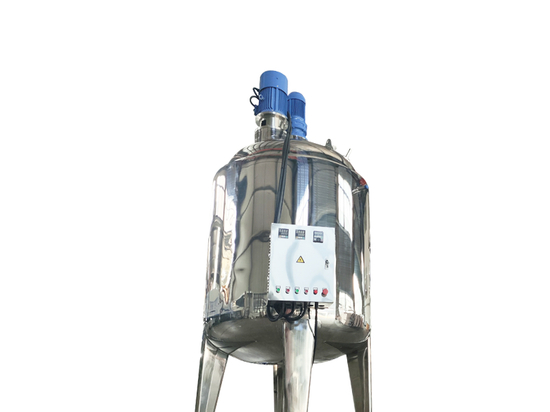
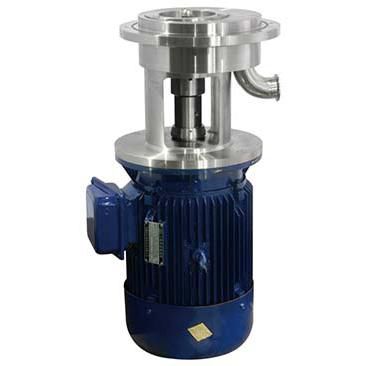
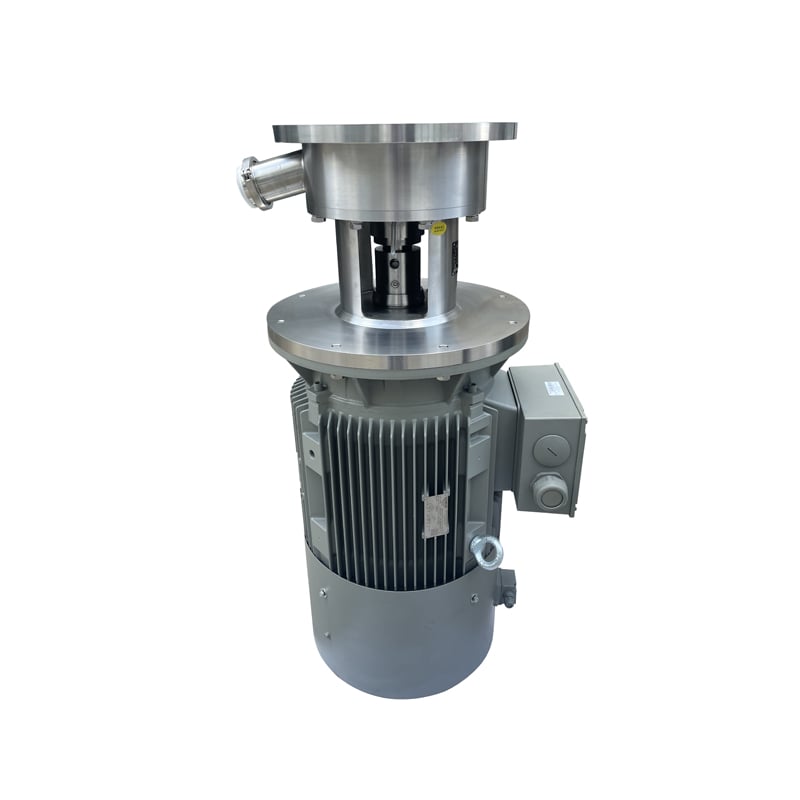
An In-line Bottom Emulsifier (also known as a Bottom-Mounted High-Shear Mixer, In-Line Homogenizer, or In-Tank/In-Line Rotor-Stator Mixer) is a high-intensity, high-shear mixing and emulsification device installed directly at the bottom of a process
Working Principle
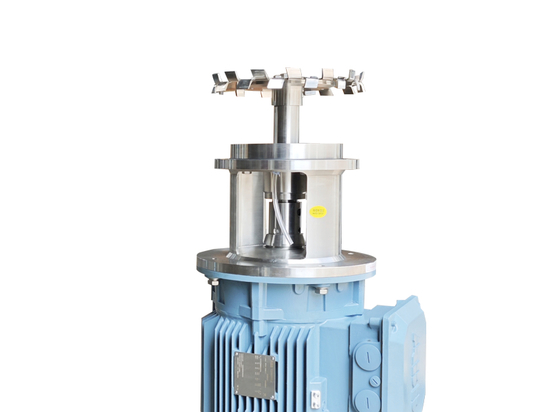
The core of its operation is the High-Shear Rotor-Stator Generator Head, mounted on a shaft extending into the tank bottom.
Intake & Acceleration: The high-speed rotor (impeller) rotates within a stationary stator (surrounding sleeve with precisely machined openings). The rotation creates a powerful suction force, drawing materials downward from the top and sides of the tank directly into the center of the generator head.
High-Shear Processing: The product is forcefully accelerated through the narrow gap between the rotor and stator. It is then expelled at high velocity through the stator's slots or holes. This subjects the material to intense mechanical and hydraulic shear forces:
Mechanical Shear: From the physical contact between the rotor and stator.
Hydraulic Shear: From the extreme turbulence and velocity changes as the product jets through the stator openings.
Circulation & Recirculation: The processed material is ejected from the stator radially and/or axially, creating a strong upward flow. This draws unprocessed material back down into the mixing zone in a continuous, rapid bottom-to-top circulation loop, ensuring the entire tank contents pass through the high-shear zone multiple times for uniform results.
This process efficiently reduces droplet/particle size (down to micron/sub-micron range), breaks down agglomerates, and creates stable, homogeneous emulsions, dispersions, and suspensions.
Key Features
Rapid, Efficient Processing: Delivers significantly faster mixing, emulsification, and particle size reduction compared to conventional top-entry agitators, reducing batch cycle times.
Exceptional Homogeneity & Stability: Produces uniform, fine, and stable end-products with a narrow particle size distribution, enhancing product quality and shelf life.
Handles a Wide Viscosity Range: Effective from low-viscosity solutions to high-viscosity pastes and creams.
Eliminates Dead Zones: The powerful bottom-up suction and axial flow pattern ensure complete turnover of the entire tank contents, preventing unmixed material from settling at the bottom.
Space-Efficient & Hygienic Design: Bottom-mounted installation frees up space above the tank for other equipment (e.g., manways, other mixers). Designs are available with CIP/SIP capabilities for strict hygiene requirements (e.g., food, pharmaceutical).
Scalability: Results are scalable from lab/pilot plant to full production, as the key shear intensity parameter (tip speed) can be maintained.
Flexibility: Often used in combination with a slow-speed anchor or sweep agitator for wall scraping and bulk motion in high-viscosity applications.
Typical Configuration
A standard in-line bottom emulsifier system consists of:
Mixing/Shearing Unit:
Generator Head (Rotor-Stator Assembly): The core workhead. Available in various designs (e.g., slotted, fine screen, square hole) for different shear intensities and applications. Typically constructed from stainless steel (304, 316L) or hardened alloys for wear resistance.
Shaft: Connects the motor to the generator head. Can be a solid shaft or a hollow shaft for CIP return.
Mechanical Seal: Critical component for preventing leakage. Options include single, double, or cartridge-type mechanical seals, often with flush ports for compatibility with the process media or for clean-in-place (CIP) fluids.
Drive System:
Electric Motor: A high-power electric motor (often a 3-phase induction motor). Power rating depends on tank volume, viscosity, and process requirements.
Gear Reducer/Speed Controller: A heavy-duty gearbox to reduce motor speed to the optimal operating speed for the rotor (typically in the range of 1,000 to 10,000 rpm). Alternatively, a Variable Frequency Drive (VFD) can be used for precise speed control, soft starts, and process flexibility.
Installation & Mounting:
Tank Bottom Flange: The emulsifier is mounted directly onto a dedicated, reinforced flange welded to the bottom of the process vessel. Proper gasketing is crucial.
Support Structure: For larger units, an external support frame or stanchion may be required to absorb mechanical loads and vibrations.
Process Tank: The vessel itself, which may include:
Baffles: To optimize flow patterns and prevent vortexing.
Jacket: For heating or cooling during processing.
Other Agitators: As mentioned, a complementary slow-speed agitator is common.
Control System (Optional):
Control Panel: Houses motor starters, VFD controls, and safety interlocks.
Instrumentation: Sensors for temperature, pressure (in closed systems), or power draw (amperage) to monitor process consistency.